Idaho Furnace Pros
A gray high-efficiency furnace with two white PVC vent pipes stands beside galvanized sheet-metal ductwork in a dim basement with exposed joists and a concrete floor.

Done looking for a furnace pro

Is a high-efficiency gas furnace worth it in Idaho

Idaho power is cheap and most homes here heat with gas, so a high-efficiency furnace doesn't pencil out the same way it might elsewhere. Whether it's worth the extra cost over a standard model depends on what you pay for gas, how long you plan to stay in the house, and what your current furnace is costing you now. This page walks through that math, and gets you to someone local who installs both kinds and can tell you which one fits your house.

I'm done searching

A high-efficiency furnace burns less gas than a standard one by pulling more heat out of the exhaust before it leaves the house, which is why they run around 95 to 98 percent efficient instead of 80. In Idaho, where gas is usually the fuel and winters push a furnace hard, that difference shows up on your bill every month from November through March. Whether it pays for itself depends mostly on what you pay per therm and how long you plan to stay in the house. If you're building new or your old furnace already needs replacing, the cost gap between a standard and high-efficiency model is smaller than people expect, since both need to go in either way. If your current furnace still works fine, there's less reason to rush into an upgrade just for the efficiency gain. A contractor who installs furnaces in Idaho homes regularly can tell you, based on your house and your gas bill, whether the higher-efficiency model actually makes sense for you.

A dark high-efficiency furnace on a concrete pad in a basement, connected to galvanized ductwork, white PVC vent pipes, and copper and black gas piping, with concrete walls and wood framing nearby.

The 95 percent furnace running right

The PVC pipes running out the side of this furnace carry the exhaust and the condensate, cool enough to vent through plastic instead of a metal flue. The copper gas line feeds a burner that only uses what the house actually needs that day.

A gas furnace with a louvered upper panel stands on a concrete pad in a basement, flanked by sheet-metal ductwork, white PVC and metal pipes, and insulated columns.

The older standard furnace losing ground

This one vents through metal, not PVC, because its exhaust never cools enough for plastic. It burns more gas to put out the same heat, and once it's old enough to need a condensate pipe added on, parts are getting harder to find.

Standard vs. High-Efficiency Furnace

Standard efficiency

  • Costs less to install, which matters more if you don't plan to stay in the house long enough to make back the difference on gas bills.
  • Runs at 80 percent efficiency, so about 20 cents of every dollar of gas goes out the flue instead of into the house.
  • Vents through a metal flue, which most older Idaho homes already have in place, so the vent doesn't need to change.
  • Has fewer parts to fail since there's no second heat exchanger or condensate system to maintain.
  • With gas priced the way it is in Idaho, the extra 15 to 18 percent efficiency of a high-efficiency unit takes longer to pay back here than in a state with pricier gas.

High efficiency

  • Runs at 95 to 98 percent efficiency, so less of what you pay for gas escapes unused out the exhaust.
  • Vents through PVC pipe instead of a metal flue, which means the installer has to run new venting if your house doesn't already have it.
  • Produces condensate that has to drain somewhere, so the install includes a condensate line that a standard furnace doesn't need.
  • Lower gas use shows up smaller on the bill here than it would somewhere with higher gas rates, since Idaho's rates are already low.
  • Makes more sense if you're planning to stay in the house long enough for the lower gas bills to add up against the higher install cost.
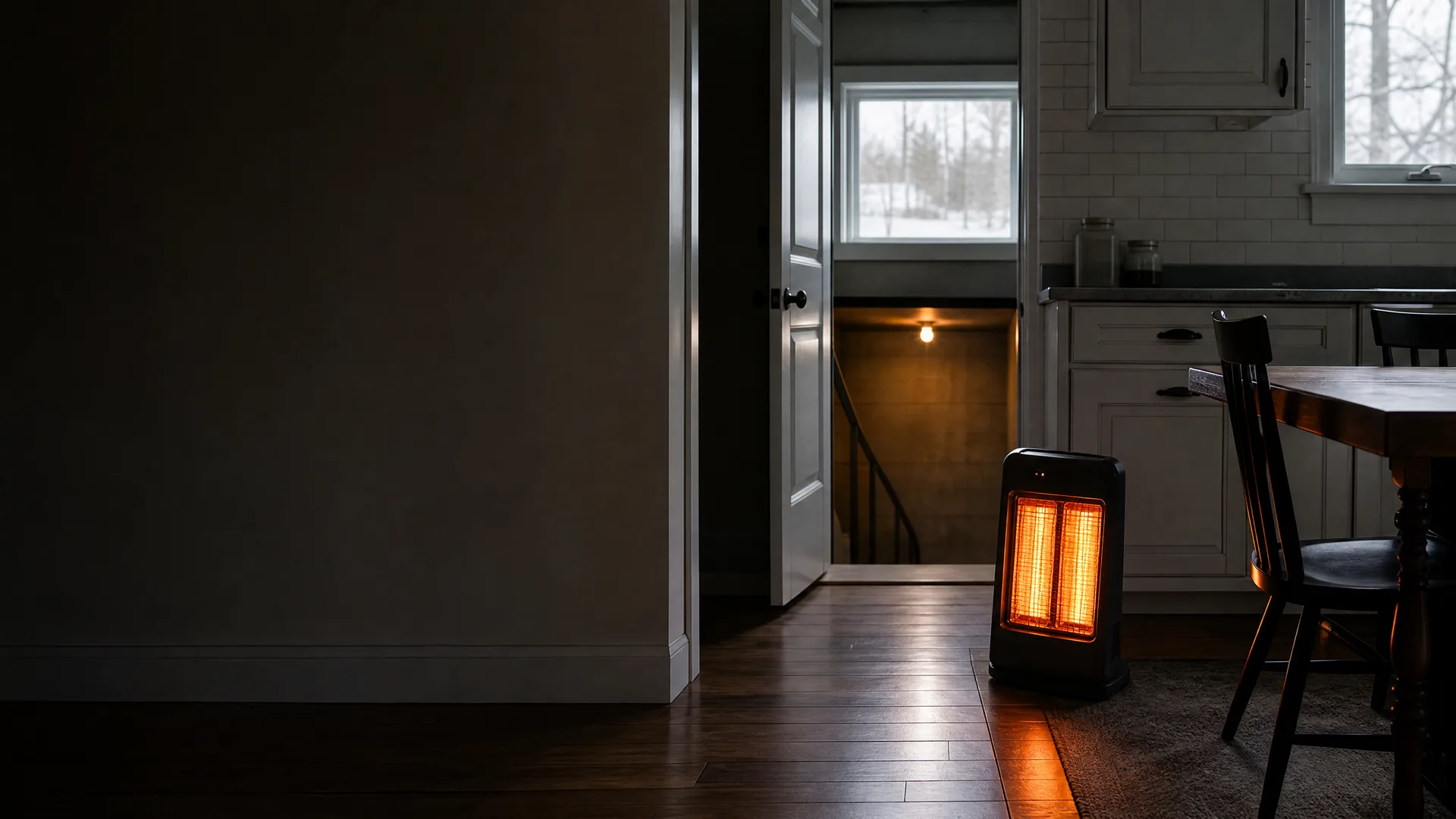
A portable electric space heater with glowing orange elements stands on a dark wood floor in a dim room beside an open door leading to a lit stairway, with a kitchen counter, window and wooden table and chairs at right.

The space heater has been running since five. You heard the old furnace try twice and quit both times, that click-click-click from the basement before it gave up. So the heater sits by the kitchen table, glowing orange, and the dog won't leave its spot in front of it. The basement door stays open because the cold is pooling down there and it feels wrong to shut it in. Outside the window the sky is doing that flat gray thing Idaho gets in February. You've got your coffee, you've got the one warm room, and you've already found the page on your phone before anyone else is even awake.


It's off your list after this

A furnace that won't fire and a decision about whether to replace it with the same kind or a high-efficiency model aren't two separate problems. They happen at the same time, usually on a cold morning when the basement is making noises you haven't heard before. Figuring out whether a 95 percent furnace pays off on your gas bill takes some thought. Figuring out which contractor to trust with the install, on a day when you need heat back, doesn't leave room for much thought at all. A furnace tech who works in Idaho winters has seen both kinds of installs enough times to tell you honestly which one fits your house, your gas rate, and how long you're staying put. Sending the request means one local, licensed contractor looks at your actual furnace and your actual situation, not a general answer about percentages. You still have a cold house and a choice to make. This just means you're not making it alone, or from scratch.

A gas furnace with two gray access panels stands against a plain wall in a basement, connected to sheet-metal ductwork, white PVC vent pipes, and a yellow gas line.

Where the extra heat goes

A standard furnace sends its exhaust out a metal flue while it's still hot enough to carry real heat with it. A high-efficiency furnace runs that exhaust through a second heat exchanger first, pulling out more of the heat before it leaves, then vents it through PVC because by then it's cool enough for plastic to handle. That second pass is where the fuel savings come from. It's also why the installation looks different, not just the furnace itself.

A gray high-efficiency furnace in a basement corner with white PVC vent pipes, copper and black gas piping, and sheet-metal ductwork beside a plain white wall and wooden stair framing.

What a cold snap costs you

Idaho winters push a furnace hard enough that the gap between 80 percent and 96 percent shows up on the meter, not just on paper. A furnace that runs more hours a day because it's cold out burns more gas doing it, so the same percentage difference in efficiency turns into more actual therms saved the longer and harder your furnace runs each winter. A mild winter narrows that gap. A hard one widens it.

Winter nights average 22°F statewide

Nights this cold mean your furnace is running long stretches to hold the house steady, not just kicking on now and then. That's more hours on the burner and the blower over a winter, which is where the gap between 80 and 95 percent efficiency actually shows up on your gas bill.

NOAA nClimDiv 1991-2020 county normals weighted by homes

So, Is It Worth It

  • Whether a high-efficiency furnace pays off in Idaho depends on your gas rate, how long you plan to stay, and what your current furnace costs you to run.
  • Cheap power and cold winters push harder on the furnace than on the AC, so the gas savings show up mainly in the coldest months.
  • A standard 80 percent furnace is less expensive to install and still a reasonable choice if you won't be in the house long enough to recover the difference.
  • A 95 to 98 percent furnace sends less heat out the flue and uses PVC venting instead of a metal one, a sign of how it's built, not just how it's rated.
  • Neither option is wrong; the right one depends on what you're paying for gas now and how you weigh the install cost against it.
  • A licensed local installer can look at your current furnace, your gas bills, and your house, and tell you which one actually makes sense for you.

There's no single answer that fits every house in Idaho, because the math runs on your gas rate, your winters, and how long you're staying put. A high-efficiency furnace pulls more heat out of its own exhaust before venting it outside through PVC pipe instead of a metal flue, and that's real, measurable savings over a season of cold nights. Whether those savings add up to more than the extra you'd pay to install one is the actual question, and it depends on numbers specific to your house: what you're paying for gas now, how old your current furnace is, and whether you plan to be in this house long enough for the difference to matter. A standard 80 percent furnace still heats the house fine and costs less upfront, which makes sense if you're not staying long or if your gas bills haven't been high enough to justify the jump. A 95 to 98 percent furnace makes more sense if you're settled in, your winters run long and cold, and you'd rather spend less on gas every year you're there. Neither choice is a mistake. One trades a lower install cost for higher running cost, the other does the opposite, and which way that balance tips is particular to your house, not a general rule about Idaho. A licensed local installer who works on these furnaces every winter can look at what you have now, what you're paying, and what your house actually needs, and tell you straight which one makes sense for you.

A woman with long light-brown hair in a gray knit sweater sits in a living room looking off to the side, with a sectional sofa, houseplant, lamp, wooden table and large windows behind her.
A woman in a chunky gray turtleneck sweater sits indoors looking off to the side, with a blurred dining table, chairs, pendant lamp and window behind her.
A woman in a cream knit sweater with her hair in a bun stands near a window, looking off to the side, with a gray sofa, houseplant and open kitchen with pendant lights blurred behind her.
A woman with long brown hair in a cream knit sweater stands near a window, looking to the side, with a white sofa, shelving, and a hallway visible behind her.

Furnace Installation

Stop chasing a furnace pro

Your request goes to one pro, not a list of companies.

A black-framed smartphone standing upright against a plain white background, its screen filled with solid green.
Step 1 of 3: Equipment