
Repair or replace an aging furnace in Idaho
If your furnace is old enough that you're asking this question, the answer usually comes down to how it's failing. A furnace that won't fire, short cycles, or needs a new igniter or blower motor after 15 years or more is usually cheaper to replace than to keep patching, since parts for an old unit cost more and still leave you with an old furnace. A furnace that's still running fine but just old is worth watching, not replacing on a guess. Since most homes in Idaho heat with gas, the furnace is doing real work through the cold months, and a unit on its last legs tends to fail on the coldest night, not a mild one. If yours is already showing signs, a tech can look at the actual unit and tell you whether this is a repair or whether it's time to plan the replacement before next winter.


A furnace doesn't just flip on. The inducer motor spins up first, clearing the exchanger before anything burns. A pressure switch has to confirm that draft is working, and only then does the igniter glow and the gas valve open. Any break in that order and the furnace shuts itself down rather than risk an unconfirmed flame. That's usually a cracked igniter or a flame sensor coated in residue, both common once a unit has run for ten or fifteen winters.
Short cycling, where the furnace fires and quits in quick bursts, gets blamed on the thermostat but it's almost always the sensor or a cracked heat exchanger. A cracked exchanger is the one failure that doesn't get patched. It lets combustion gas mix into the air moving through your ducts, which is a safety call, not a repair decision.
Age shows up elsewhere too. AFUE measures how much gas actually becomes heat, and a furnace from the 1990s can run 15 to 20 points below what's installed today. Blower motors just wear out from months of steady use, showing up as weak heat or a unit that overheats and trips off.
How a Gas Furnace Actually Fires
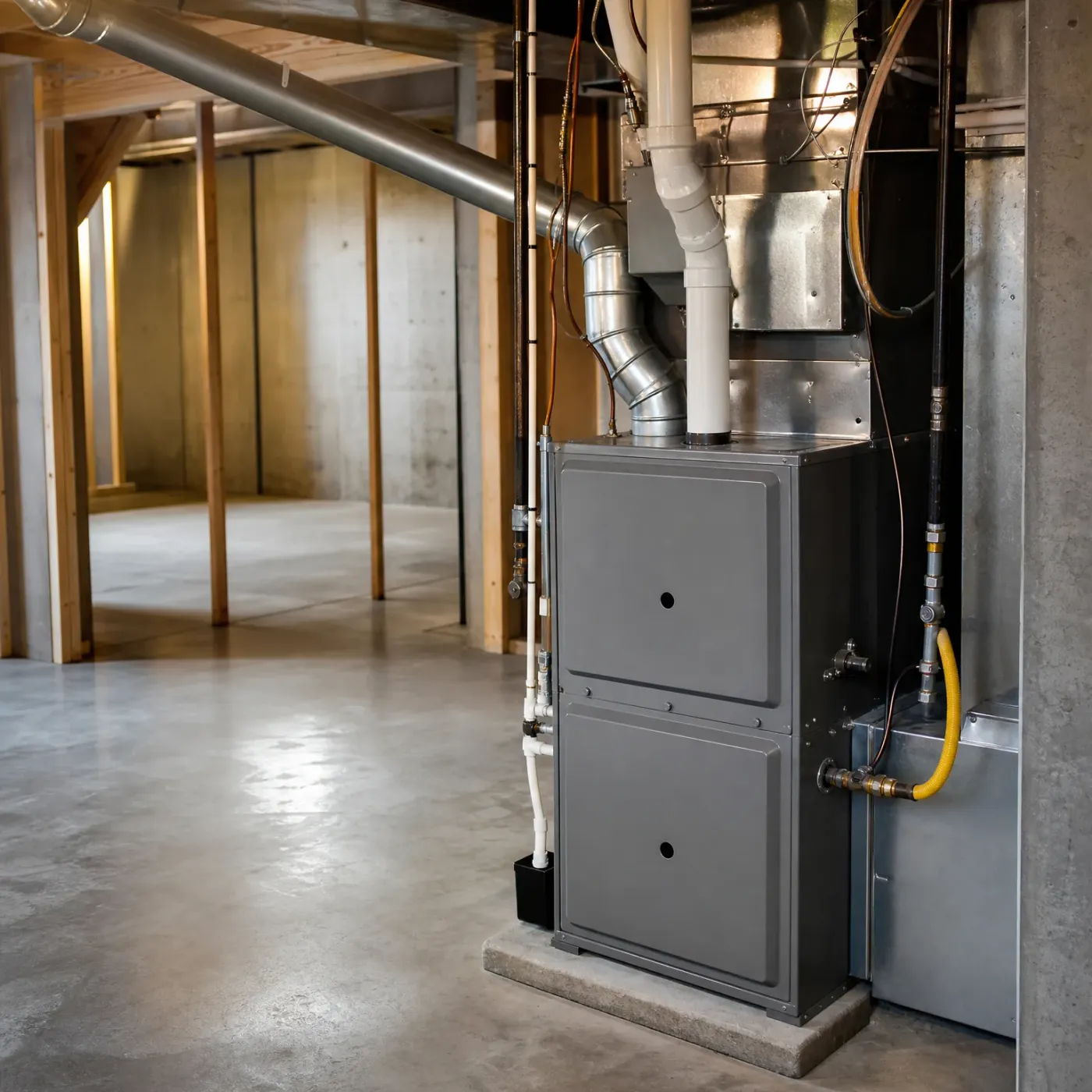
- A gas furnace lights through a sequence: the inducer motor starts, a pressure switch confirms it's pulling air, then the igniter glows before the gas valve opens.
- If the igniter cracks or the flame sensor builds up a coating, the furnace will shut itself off rather than let gas burn without a confirmed flame.
- A heat exchanger that's cracked lets combustion gas mix into the air your blower pushes through the ducts, which is why a contractor won't patch one.
- Furnaces are rated by AFUE, the percentage of gas turned into heat, and a unit from the 1990s is often 15 to 20 points below a new one.
- Blower motors wear out from running for months straight, and a failing one shows up as weak airflow or a furnace that overheats and trips off.
- A furnace that short cycles, turning on and off in quick bursts, is usually responding to a cracked exchanger or a dirty flame sensor, not a thermostat problem.




The right pro for this job
Send the form and the search for an installer is over.
A local installer who puts in furnaces gets your project.
It costs nothing to send, and you don't have to hire anyone.
How many times can you repair a furnace before replacing it makes more sense?
You've called for a repair more than once this winter, maybe a new igniter last year and now a blower motor or pressure switch, and you're starting to wonder if you're just feeding money into something that's going to need the next part soon anyway. There's no fixed number that tells you the answer, but there's a point where the repairs themselves start telling you something.
Two repairs in the same winter, on a furnace past 15 years, is usually the point to stop
One repair doesn't mean much. Furnaces run through thousands of cycles a winter, and a single part failing, an igniter or a pressure switch, doesn't say anything about the rest of the furnace. The second repair in the same season is different. It means whatever caused the first failure is still there, and the heat exchanger and blower have kept running under the same strain since. If your furnace is past 15 years and you're pricing a second repair before spring, that's the furnace telling you it's not one bad part anymore. A furnace in its first ten years failing twice is still probably worth fixing. Past 15, the pattern itself is the answer.
Replacing a furnace starts with sizing the new unit to your home.
The old furnace and its vent pipe or flue get disconnected and removed.
The gas line, electrical, and ductwork connect to the new furnace.
A startup test checks ignition, airflow, and the pressure switch before closing up.


Winter nights average 22°F statewide
At 22°F, your furnace is cycling on most of the night just to hold the house steady. An old unit that hesitates to fire or can't keep up will show it fastest on nights like these, when it's working hardest and can least afford to quit.
NOAA nClimDiv 1991-2020 county normals weighted by homes
A furnace loses efficiency as its heat exchanger ages and its burners wear, so an old unit burns more gas to hold the same temperature than a new one would.
That difference shows up on the gas bill every month of winter, not just on the coldest nights, which is why replacement often pays for itself faster than another repair.



Either way, you don't have to figure this out alone
A furnace that fires clean and holds its temperature is worth another winter with a repair. One that's failed more than once, or is old enough that the next part to go will cost nearly what a new unit would, usually isn't. You've seen enough above to know which side yours is on.
If it's time to replace, the next step is getting matched with a contractor who installs furnaces in Idaho and knows what a gas furnace needs to run right through a winter here. They'll look at your home and your old unit and reach out from there. Once you send the form, that part isn't yours to chase down anymore.

Matched to your furnace job
After this form, you can stop searching for a furnace pro.
No charge to send it. You decide if you hire them.