

Why one room stays cold in an Idaho winter

One request and the search for a pro is handled.

Hand it over

Why is one room in my house always cold in winter?

Every other room gets warm but one stays cold no matter how high you set the thermostat. You've maybe closed the vent all the way, checked for a draft under the door, even run a space heater in there. It's that room, every winter, and you want to know if something's actually wrong or if it's just how the house is built.

That room is the farthest from the furnace, or its ductwork is undersized

Heat loses pressure the farther it travels through ductwork, so the room at the end of the run gets less of it than the room next to the furnace. If that room also sits above an unheated crawlspace, over a garage, or on a corner with more outside wall, it loses heat faster than it gains it. In an Idaho winter, with the furnace running for months straight, that gap shows up every day. A blocked or partly closed vent, a kinked duct, or a return vent that's shut will make it worse. It's rarely the whole furnace at fault. It's that one room losing a fight it was already set up to lose.

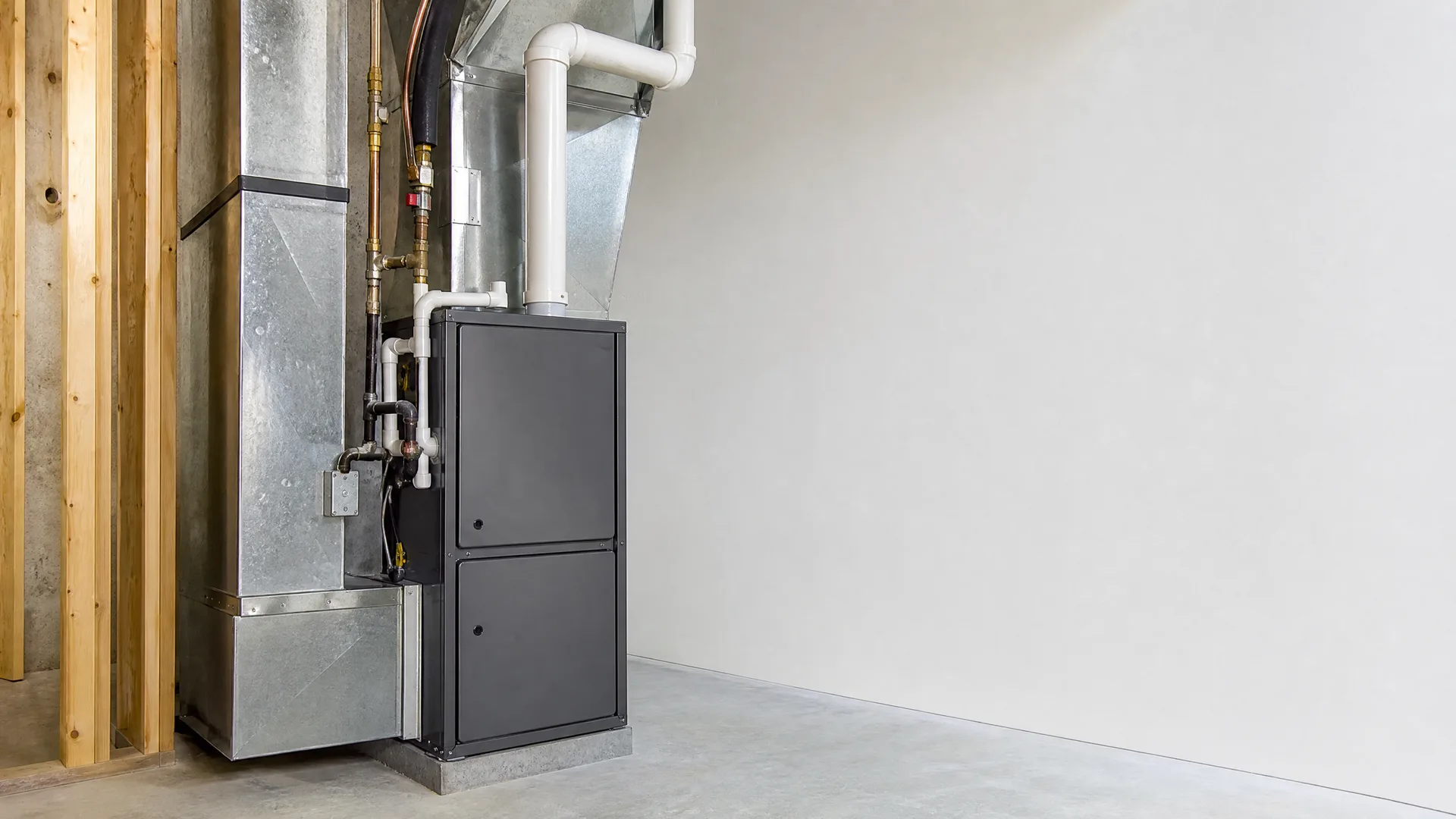
A dark gray furnace connected to galvanized sheet-metal ductwork, white PVC vent pipes and copper piping, standing against a plain light wall in a room with a bare concrete floor and exposed wood framing at left.

Why the farthest room loses the most heat

Your furnace pushes warm air through one trunk line and branches off it to every room. The room farthest from the furnace sits at the end of the longest branch, so by the time air gets there it's lost some of its heat to the duct metal and whatever attic or crawlspace that duct runs through. A room closer to the furnace gets air that's barely cooled at all. Add a wall facing north or a window with a cheap seal, and that back bedroom or bonus room over the garage never catches up.

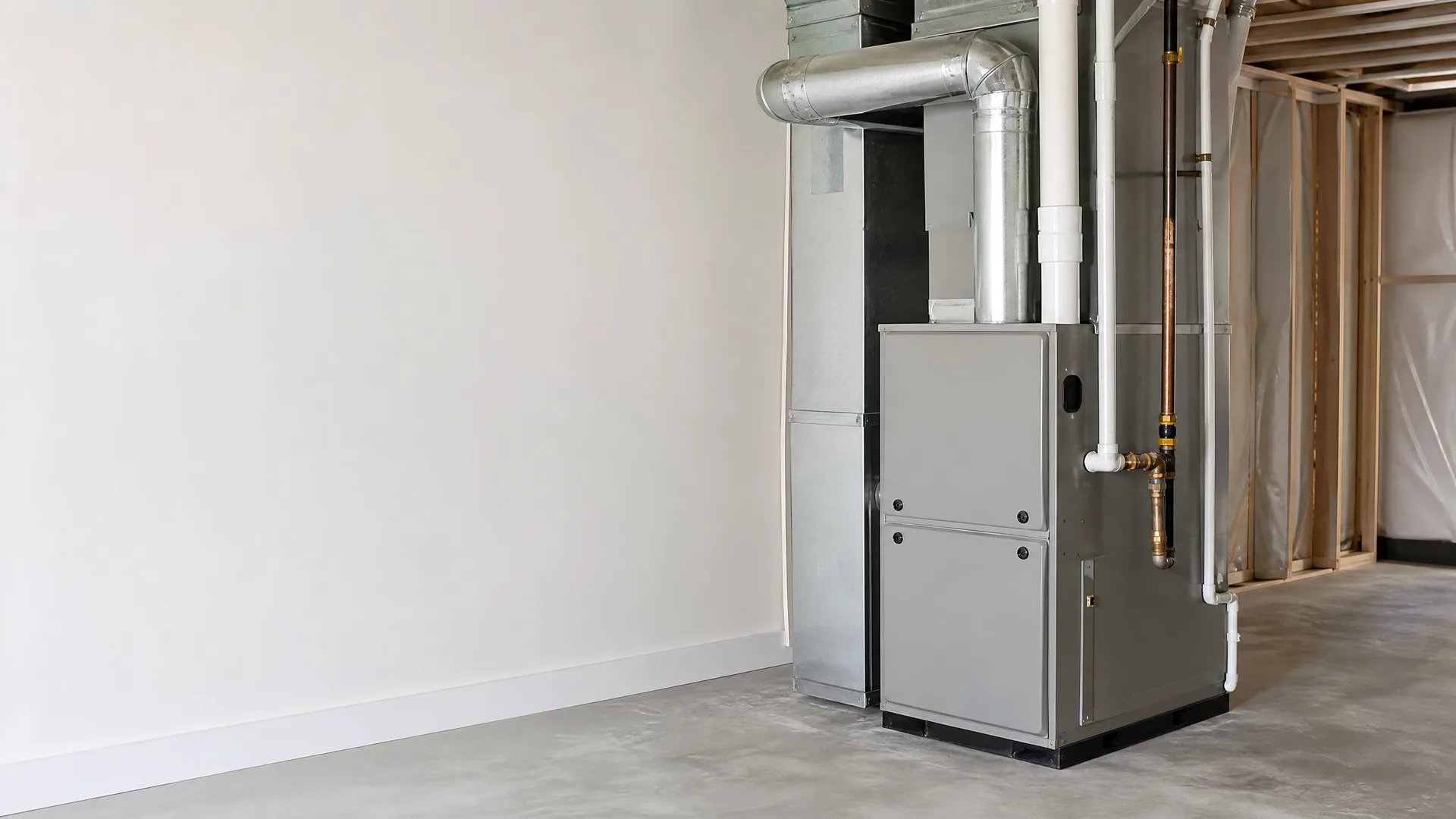
A gray high-efficiency furnace with sheet-metal ductwork, white PVC vent pipes and copper piping stands against a wall in an unfinished basement with a concrete floor and insulated wood stud framing at right.

A closed vent doesn't fix the real problem

Closing a vent to push air elsewhere sounds logical, but most duct systems aren't built to handle that. The blower still moves the same amount of air, so pressure builds up in the closed-off duct and can push air out through small gaps and seams before it ever reaches another room. A damper stuck in the wrong position, a crushed flex duct, or a disconnected run does the same thing: it starves one room while the furnace runs on, working just as hard for less result.

Is it just that one room, or is the whole house working harder?

You already know which room it is. You walk in and the air feels thinner somehow, colder on your skin than the hallway you just left. Maybe it's the bedroom over the garage, or the one at the end of the hall farthest from the furnace. You've felt the vent and the air coming out is weaker than in other rooms, or barely moving at all. At night you can feel the cold coming off the window or the wall. Meanwhile your furnace is running longer than it used to, trying to satisfy a thermostat that sits in a room that's already warm, while the cold room never catches up. Left alone, that's a furnace working harder for less, and a bill that reflects it.

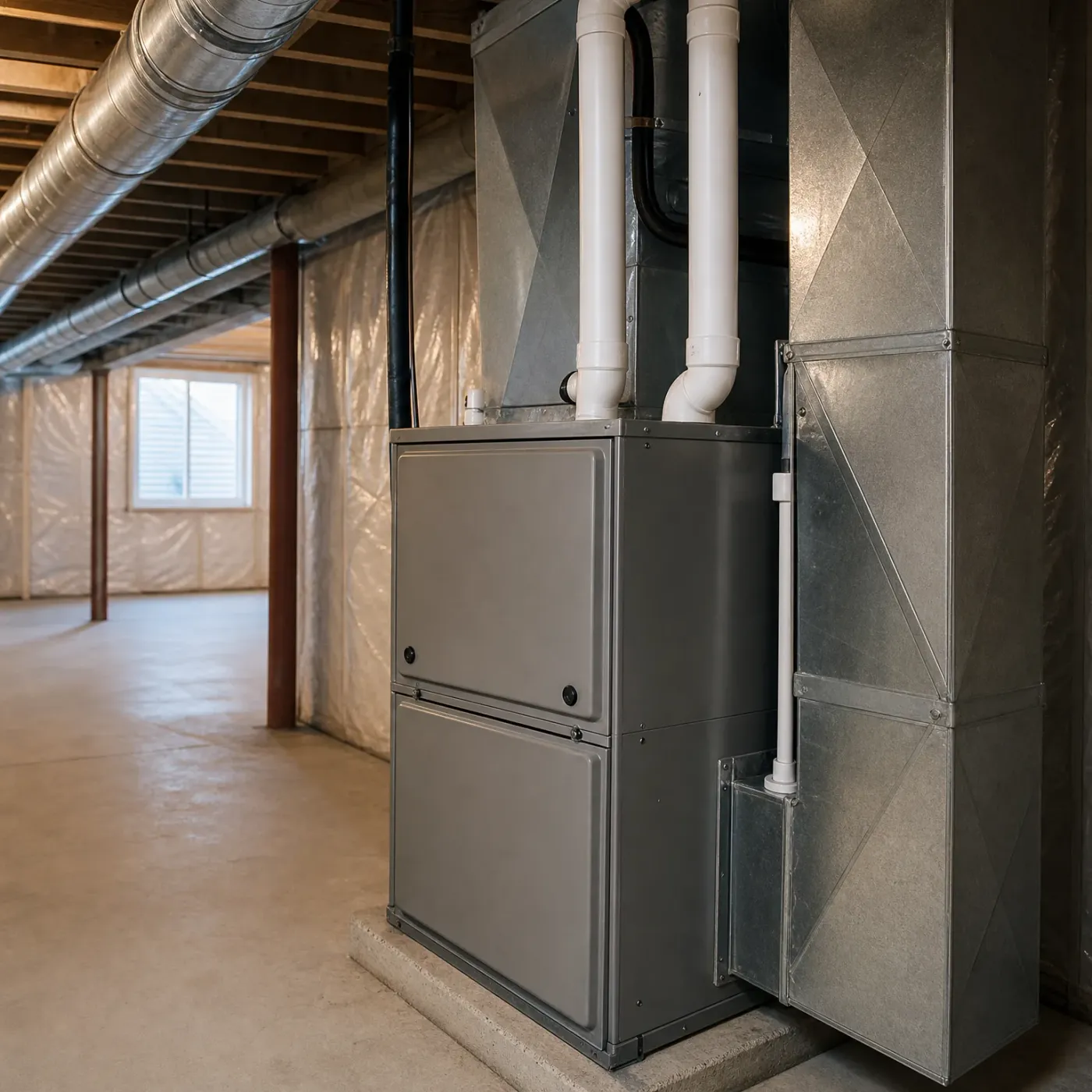
A gray high-efficiency furnace in a basement with sheet-metal ductwork, white PVC vent pipes, metal plumbing lines, a condensate pump on the floor, and a window showing green trees outside.

Furnace running as it should

This is what a furnace looks like when it's keeping up: clean burners, steady flame, ductwork carrying warm air out to every room at close to the same rate. A furnace in this shape can still lose heat to a far room through the ducts, but it isn't adding to the problem.


An older metal furnace with PVC and metal pipes stands on a concrete basement floor beside galvanized ductwork, with wooden stairs and a water tank in the background.

Furnace falling behind

Dust built up around the burners, a weak flame, a blower that struggles to push air the full length of the ductwork. A furnace in this shape doesn't just leave one room cold. It means the whole system is working harder to heat the rooms it can still reach.

A gray metal furnace with louvered vent panels stands on a concrete basement floor beside galvanized ductwork, gas and plastic pipes, and foil-faced insulation along the ceiling and wall.
Before you get your furnace repair
A basement utility area with a gray furnace, sheet-metal ductwork, pipes, plastic-covered walls, a concrete floor, and a black shelving unit holding storage bins.
After you get your furnace repair
A gray high-efficiency furnace on a concrete pad in an unfinished basement, with white PVC vent pipes, galvanized sheet-metal ductwork, insulated walls and a small window in the background.

Finding a pro stops being your job

Answer a few questions instead of calling shop after shop.

Send it once and finding someone is no longer on you.

Hand off my repair

There's no charge for the request.

A smiling man in a navy long-sleeve shirt sits at a wooden table in a kitchen and dining area, with a ceramic mug, a potted plant, and a sliding glass door behind him.
A smiling bearded man in a green henley shirt stands at a kitchen island with a gray mug, looking off to the side, with a dining area and shelves blurred behind him.
A smiling bearded man in a navy sweater sits at a white kitchen island with a ceramic mug, with open shelves, potted plants and a range hood behind him.
A smiling man in a dark olive long-sleeve shirt sits in a kitchen beside a counter with a dark mug, with a dining table, sideboard and hallway visible in the blurred background.

Living with the cold room

You keep the door open so some heat drifts in. Maybe you've moved a space heater in there for the worst months, or you just don't use the room from December to February. The rest of the house heats fine, so it's easy to call this one a quirk of the house and leave it alone. But a duct that's come loose or crushed somewhere in the line, or a blower that's lost some of its pull, usually isn't fixing itself. The gap between that room and the rest of the house tends to hold steady or get wider as the furnace ages.

Having it looked at

A contractor can get into the ductwork and the furnace itself and find what a closed vent or a space heater never will, whether it's a disconnected branch line, a damper stuck in the wrong position, or a blower that needs attention. Once that's fixed, every room draws air the way it's supposed to, including the one that's been cold for months. You skip the back and forth of searching around, calling a few places, and explaining the same cold room story more than once. Send the form and let someone else take it from there.

Winter nights average 22°F statewide

On a 22°F night, your furnace has to push that cold room's air a long way to catch up, and a furnace that's lagging anywhere struggles most at the end of the line. That's the room that falls behind first.

NOAA nClimDiv 1991-2020 county normals weighted by homes

One room running cold while the rest of the house is fine usually means the furnace or the ductwork feeding it needs a look, not a space heater running all winter. You've already closed the vent, checked the door, done what you can from inside the room. The next step is someone who can get into the ductwork and the furnace itself and find where the heat is being lost. That part doesn't have to fall on you. Instead of searching for a contractor, calling a few, explaining the cold room over and over, then sitting with quotes trying to work out who actually knows what they're doing, you send one form and the search is done. Idaho winters don't let up, and a room that's cold in December is still cold in February unless something changes. Sending the form is how that changes.

A modern two-story house with dark siding and stone base at dusk, with lit soffit lights, a path of large rectangular pavers set in dark gravel, planting beds, a lawn, and an orange and blue sunset sky above distant trees and water.

Furnace Repair

Let someone else find the pro

Step 1 of 3: Equipment
  • A ceramic vase holding leafy green branches and a shallow wooden bowl sit on a wooden window ledge beside a sunlit window, with a cream upholstered chair and knit throw in the foreground.
    • Tell a local repair pro what your furnace is doing.
    • A local pro who knows furnaces gets your details and gets in touch.
  • Sunlit living room corner with a beige upholstered sofa, a round wooden side table holding a ceramic vase of olive branches, linen curtains at a window, a floor vent in the baseboard, and a woven jute rug on hardwood flooring.
    • Get the furnace repair search off your mind today.
    • Once you send the form, finding a pro is off your list.
  • A wooden side table with a single drawer holds a shallow carved wood bowl and a white ceramic vase of green eucalyptus stems, beside a window and an upholstered chair draped with a cream knit throw.
    • Fill out one short form instead of calling around.
    • Explain the job once and skip repeating it on every call.
  • Corner of a house with horizontal siding, a white-framed window and stone veneer base, beside a covered entry with wooden steps, a potted plant, mulched beds of green shrubs and a flagstone path.
    • Your request stays with one local pro.
    • Your request goes to one pro, not a list of companies.