
Idaho Furnace Pros

Why your furnace is leaking water in Idaho

Step 1 of 3: Equipment

A furnace that's leaking water is almost always a high-efficiency condensing furnace doing what it does: pulling extra heat out of the exhaust until the moisture in it turns to water. That water is supposed to drain out through a condensate line into a drain or a pump. The leak means it isn't getting there. Usually the drain line is clogged or sagging, the condensate pump has failed, or a crack in the drain trap or line is letting water out before it reaches the drain. Sometimes the problem is the secondary heat exchanger itself, which costs more to deal with. None of this is normal wear you can wait out. Water finds its way into the blower compartment, the control board, or the floor underneath, and a clogged line that isn't cleared tends to back up worse each time the furnace runs. Worth having someone look at before the heavy use of a hard winter asks more of the system than it can handle.

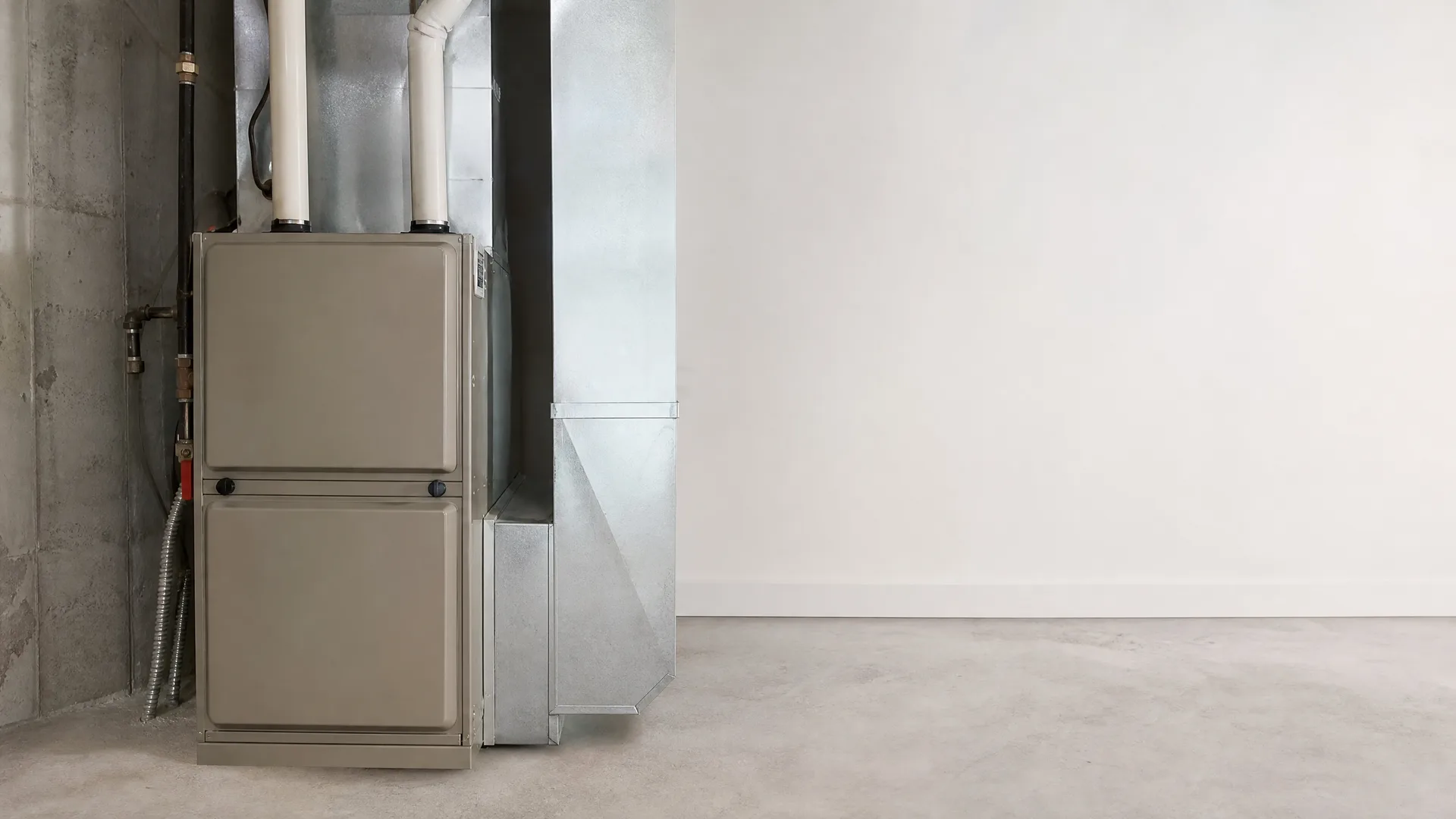
A gray furnace with white PVC vent pipes stands beside sheet-metal ductwork in a basement with a smooth concrete floor, exposed wood framing, and plastic sheeting on the walls.

Normal condensate drainage

Here the condensate line is doing its job. Water from the exhaust runs down the PVC pipe into the drain, and the furnace cycles on and off without a drop showing up on the floor. The vapor barrier behind it stays dry, and the gas lines next to it have nothing to do with the leak.


A beige furnace with two access panels stands against a concrete basement wall, with galvanized sheet-metal ductwork, a white PVC pipe, flexible conduit and insulated ducting around it.

Blocked or failing drain

This furnace is older, and age catches up with the condensate system. A clogged drain line, a cracked trap, or a failed condensate pump will back water up until it finds the floor instead of the drain. Rust on the cabinet is often a sign the leak has been going on for a while.

What's that water doing next to your furnace

You might find a small puddle on the floor near the unit, or just a damp patch on the concrete that keeps coming back no matter how many times you wipe it up. Sometimes it shows as a slow drip you can hear when the house is quiet. Other times the trap or the PVC line looks fine and the water seems to come from nowhere. If the furnace sits near drywall or framing and the leak keeps getting ignored, that moisture has somewhere to go besides the floor, and it can mean rust on the cabinet or damage to what's around it. Caught early, it's usually a simple fix.

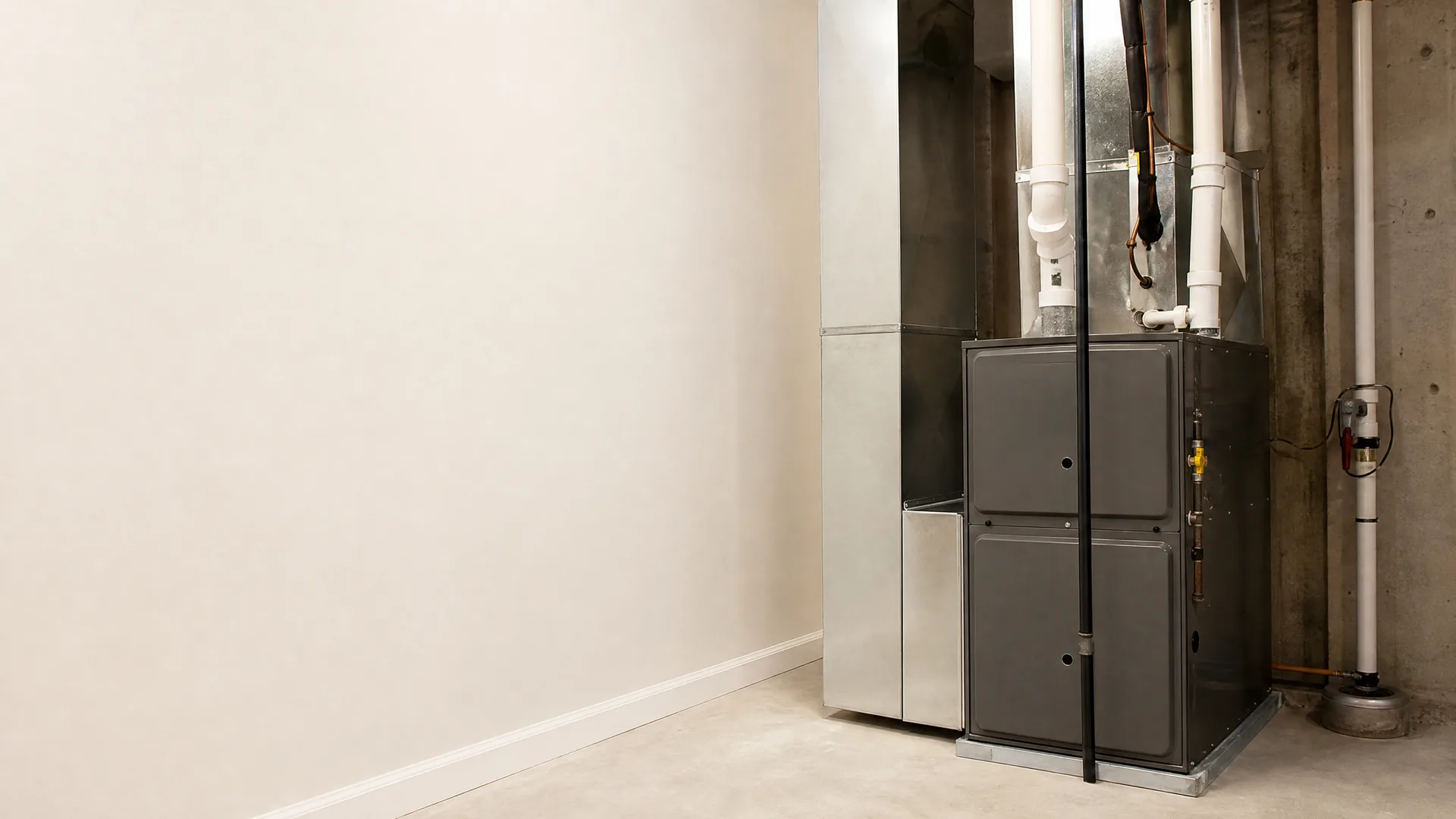
A dark high-efficiency furnace on a concrete pad in a basement, connected to galvanized ductwork, white PVC vent pipes, and copper and black gas piping, with concrete walls and wood framing nearby.

Draining the way it should

The condensate line carries the water out to the drain without a drip showing up anywhere. The PVC pipe stays clear, the trap underneath holds, and the furnace cycles through a full heating run without leaving a mark on the concrete.

A gas furnace with a louvered upper panel stands on a concrete pad in a basement, flanked by sheet-metal ductwork, white PVC and metal pipes, and insulated columns.

Backed up and finding another way out

When the line clogs or the trap cracks, that same water has nowhere to go but out. It shows up pooling under the cabinet or running down the side of the unit, often right where the PVC pipe meets the floor.

Is the Line Clogged or Is Something Failing

Clogged or cracked line

  • A clog in the condensate line or trap backs water up until it has nowhere to go but out onto the floor.
  • Algae and sediment build up inside the PVC pipe over time, narrowing it until a slow drip turns into a steady one.
  • A cracked fitting or a line knocked loose lets water escape before it ever reaches the drain.
  • A clog or crack usually means the furnace itself is fine and the fix is clearing or resealing the line.
  • Left alone, the water pools near the unit and can soak into the subfloor or the drywall behind it.

Failed internal part

  • A cracked heat exchanger or a failed condensate pump can leak water even with a clear, intact drain line.
  • A rusted or cracked drain pan lets water run straight down into the cabinet instead of out to the drain.
  • These failures sit inside the furnace, so the leak keeps coming back no matter how often the floor gets wiped dry.
  • A furnace with this kind of leak often shows other signs too, like a burning smell or short cycling.
  • This is the kind of leak that calls for a furnace tech, not a wet vac and a prayer it stops on its own.
A beige high-efficiency furnace with two white PVC pipes stands beside sheet-metal ductwork and a concrete wall in an empty basement with a bare light-colored wall and concrete floor.

Why a clean filter matters here

A dirty filter slows the air moving across the furnace's heat exchanger, and a condensing furnace relies on that airflow to move heat where it should go. When airflow drops, the exhaust doesn't cool and condense the way the drain line expects, and the condensate trap can fill faster than it empties. Idaho's dry summers mean dust gets pulled into return vents easily, so a filter that looked fine in spring can be packed tight by the time the furnace fires up again in the fall.

A gray furnace with sheet-metal ductwork and white PVC vent pipes stands in the corner of a finished basement room with a blank beige wall and concrete floor.

What the vent pipe tells you

A condensing furnace vents through PVC pipe, not metal, because the exhaust is cool enough by the time it leaves the unit to run through plastic. If that pipe slopes the wrong way or has a low spot, condensate collects inside it instead of draining back toward the trap. Look along the pipe for a sag or a section that was pieced together at an angle. A straight, properly pitched run is one less place for water to end up somewhere it shouldn't.

Winter nights average 22°F statewide

At 22°F on a typical winter night, your furnace is running long cycles for months at a stretch. That's more condensate draining out through the line, and more chances for a slow clog or a cracked fitting to show up as water on the floor.

NOAA nClimDiv 1991-2020 county normals weighted by homes

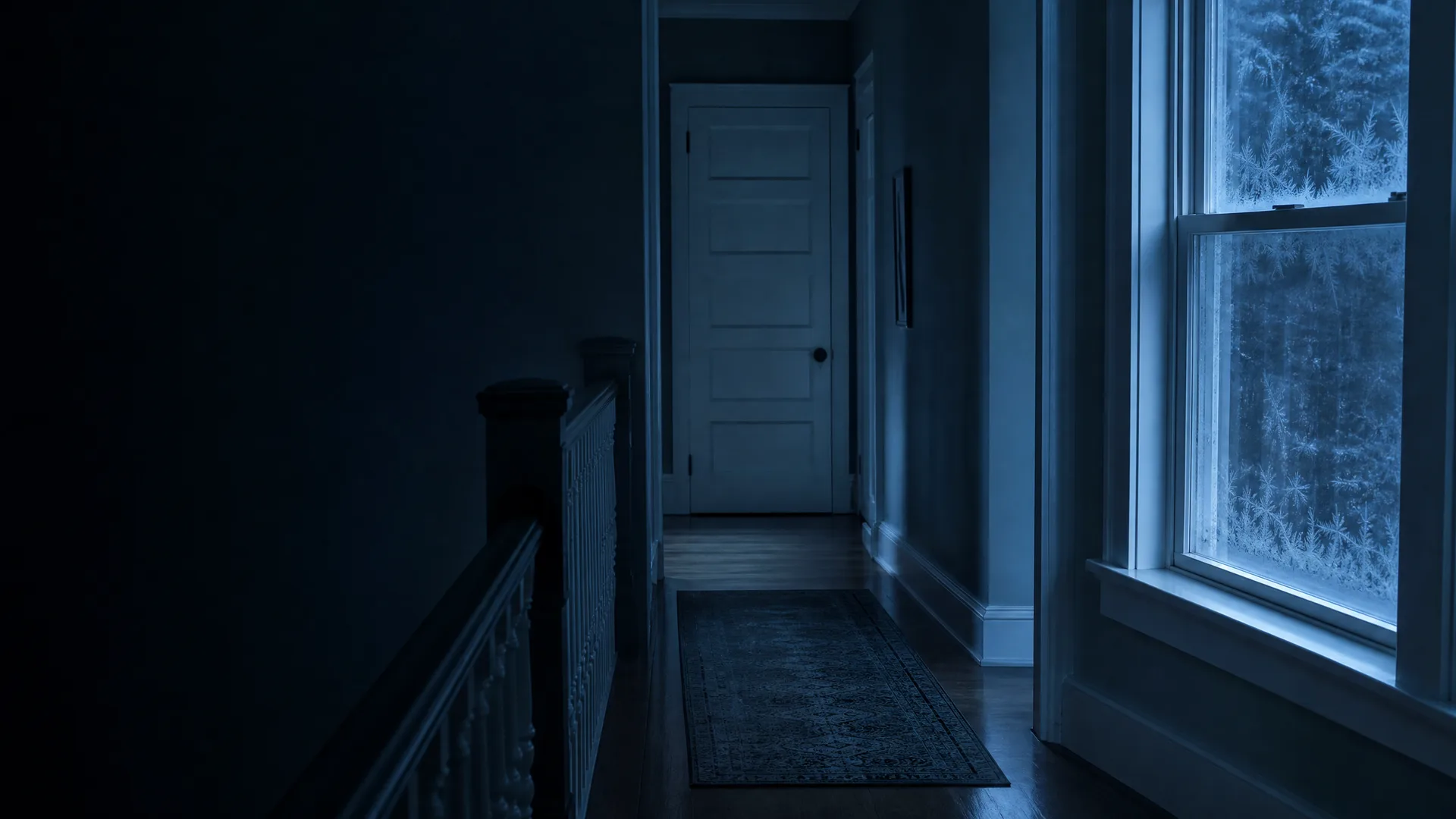
Dimly lit interior hallway at night with a closed white paneled door at the end, a long runner rug on a wood floor, a stair railing at left, and a frost-covered window admitting blue light at right.

You get up at 2 a.m. because the house feels too quiet. The hallway floor vents aren't pushing any air, and the window at the end of the hall has frost creeping up the edges of the glass. The light coming through is thin and blue. You stand there in the cold a second, waiting to hear the furnace kick on downstairs, and it doesn't. Outside it's the kind of January night that sits at 22°F for hours. You go check the furnace closet and there it is, a puddle spreading out from under the unit onto the concrete. You can send a request right then. By morning someone local who works on these furnaces all winter will have it sorted out.

One request and it's handed off

A furnace that's been running long cycles all winter puts a lot of water through that condensate line, and a clog or a cracked fitting doesn't usually announce itself before it shows up on your floor. By the time you see the puddle, the line's already backed up, and running the furnace more while you wait only sends more water where it shouldn't go. This is a straightforward repair, but it's one where knowing furnaces matters. Someone who works on them every winter in Idaho has seen which fitting cracks, which trap clogs, and where the line tends to fail in a gas furnace like yours. Send the request and a licensed local contractor who does this kind of work gets it, not a handful of companies competing for your callback. From there, it's off your plate. You stop checking the floor every few hours and let someone who knows this furnace take it from here.

A smiling man in a blue denim shirt over a white tee sits at a light stone kitchen counter with a grey mug and a bowl of oranges and bananas, with pendant lights and shelving behind him.
A smiling bearded man in a grey long-sleeved shirt sits at a kitchen counter with a dark mug, with a dining table, pendant light and glass doors onto greenery behind him.
A bearded man in a dark green knit sweater smiles and looks off to the side while standing at a kitchen counter with a white mug of coffee, with open shelving, a potted tree, and a dining table near large windows behind him.
A man with dark curly hair in a dark green sweater stands smiling and looking to the side in a kitchen with white cabinets, a potted plant, a stone countertop with a ceramic mug, and a dining area with framed art in the background.

Why does water only leak from my furnace when it's really cold out?

Why does water only leak from my furnace when it's really cold out?

Cold snaps make the condensate line itself freeze up, not just run harder

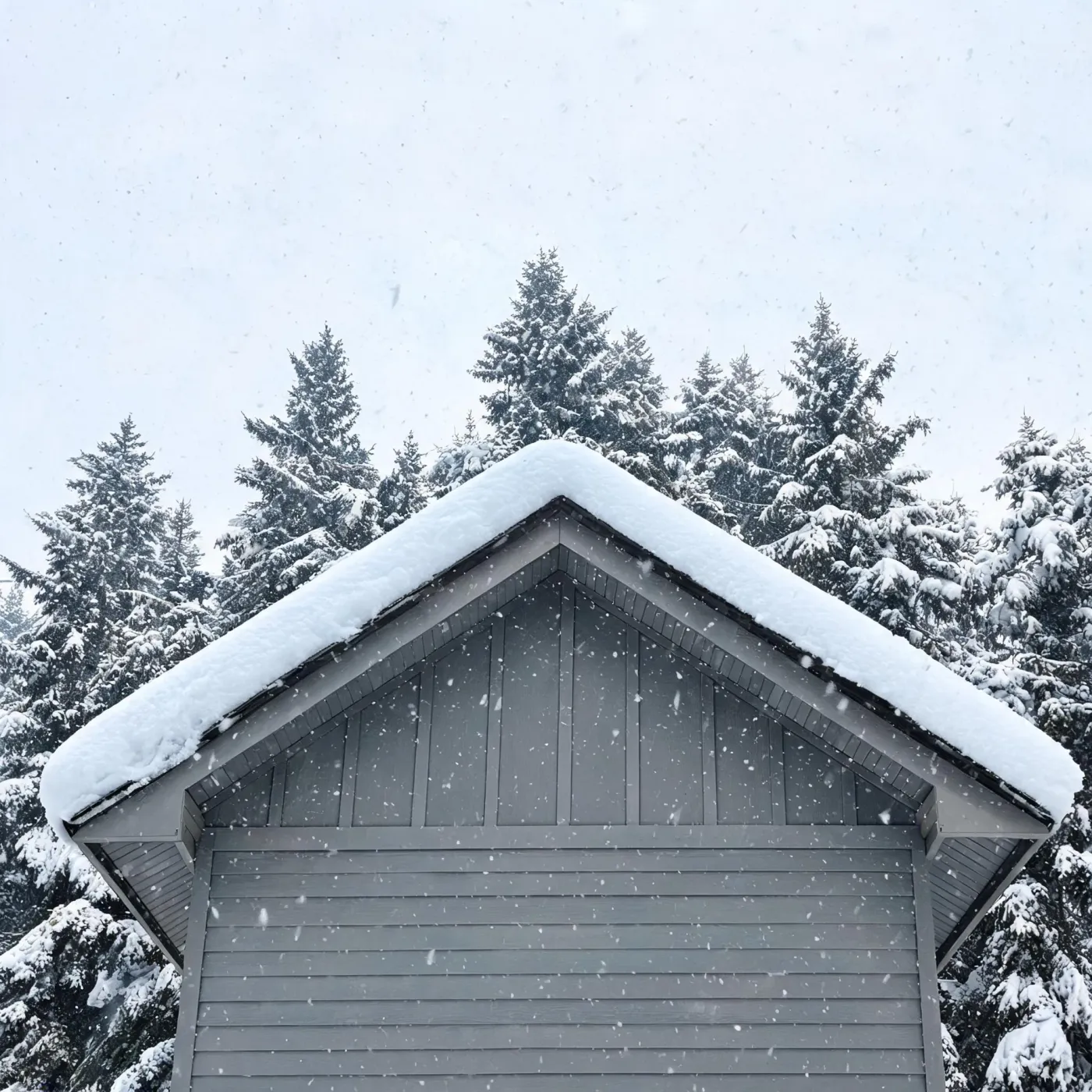
When it's 20°F outside or colder, the part of the condensate line that runs through unheated space, like a garage or near an outside wall, can freeze solid. Water backs up behind that ice with nowhere to go, so it finds its way out through the trap or a loose fitting instead. The furnace itself isn't doing anything different. It's just running more hours because of the cold, pushing more condensate through a line that's narrower than it should be, or partly blocked by ice. Once the weather warms back up and that section thaws, the leak can disappear on its own, which is exactly why it seems tied to the cold.

Gray wood-clad gable end of a building with a thick layer of snow on its roof, backed by snow-covered conifer trees under an overcast sky with falling snowflakes.

Statewide, winter nights average 22°F, according to NOAA climate data. That kind of cold keeps your furnace running long heat cycles for most of the night, not short bursts. Long cycles mean more exhaust moving through the condensing furnace, and more water draining out through that PVC line each time. A line that's narrowing from algae or sitting on a bad slope doesn't show it on a mild night. It shows it after six or eight hours of steady draining, which is what a 22°F night asks of the system. If you're seeing water by morning more than at any other time, the cold overnight stretch is why.

NOAA nClimDiv 1991-2020 county normals weighted by homes

An older beige furnace with a louvered vent panel stands on a concrete basement floor beside galvanized sheet-metal ductwork, a metal flue pipe and vertical pipes along a concrete wall.
Before you get your furnace repair
A beige high-efficiency furnace with white PVC vent pipes stands beside galvanized sheet-metal ductwork in a basement with a concrete floor, exposed wood studs, and metal piping along the wall.
After you get your furnace repair

Where the water is coming from

  • Water next to your furnace almost always means the condensate line or trap is clogged, cracked, or frozen somewhere along its run.
  • Long heating cycles on cold Idaho nights push more water through that line, so a small clog turns into a visible puddle faster.
  • A dirty filter can slow the airflow a condensing furnace needs, which keeps the exhaust from condensing the way it should.
  • Below 20°F, the part of the line running through unheated space is what tends to freeze first, backing water up into the house.
  • Ignoring the drip doesn't fix the line, and it leaves the furnace running with water finding its way onto the floor every cycle.
  • A licensed local contractor who works on these furnaces every winter can trace the water back to the line, the trap, or the drain and clear it.

A furnace leaking water almost always comes down to the condensate line somewhere between the furnace and the drain. Idaho winters put that line to work. Cold nights mean long heating cycles, and long cycles mean more water moving through the PVC pipe and the trap underneath it. A line that's carried water fine for years can still develop a clog from algae and sediment, or crack at a fitting, and once that happens the water has nowhere to go but out onto the floor. A dirty filter adds to the problem by slowing the airflow the furnace needs to condense that exhaust properly in the first place. When the outside temperature drops below 20°F, the stretch of line running through unheated space is usually the first part to freeze, and ice backs water up into the house just like a clog would. None of that clears on its own. The furnace keeps cycling, the water keeps finding its way out, and wiping up the puddle only buys a day or two before it's back. What actually fixes it is tracing the water to its source, whether that's a clogged trap, a cracked section of pipe, or a frozen run of line, and clearing or repairing whatever's blocking it. A local contractor who works on condensing furnaces through the winter has seen this pattern before and knows where these lines tend to fail first in a cold snap. Getting that looked at stops the drip and lets the furnace do what it's supposed to do without leaving a mark on your floor every time it runs.

A man in a blue T-shirt sits on a light gray sofa, laughing while looking at an open laptop in the foreground, with a framed picture, lamp and potted plant behind him.
A bearded man in a plaid flannel shirt stands indoors looking out a frost-covered window, with a steaming dark blue mug on the wooden sill and snow-covered trees outside.

Done looking for a furnace pro

A furnace leaking water almost always comes down to the condensate line, the trap, or a clog built up inside them, and on a cold Idaho night that small problem turns into a puddle fast. A local contractor who works on condensing furnaces all winter can find the clog, crack, or freeze point and clear it before it backs up again. Send the form and the search ends there, one licensed contractor near you takes it from here, not a handful of companies calling at once.

Find a licensed furnace pro

Only one pro gets your request, so you hear from one company.

No fee to send it, and nothing to sign.