











Idaho Furnace Pros

Why your furnace won't shut off in Idaho

Tell a local repair pro what your furnace is doing.

Match me with a pro

A furnace that keeps running usually isn't stuck broken. It's stuck thinking it hasn't reached the temperature you set. That can mean a thermostat that's misreading the room, a flame sensor that's dirty and letting the burners run longer than they should, or a limit switch that's failed and won't tell the blower to stop. Sometimes it's simpler: the thermostat is wired to run the fan constantly, or it's set to "on" instead of "auto". With gas heat running most homes through an Idaho winter, a furnace that won't shut off is burning gas the whole time it idles, not just blowing air. Left alone, it can overheat the heat exchanger, which is a part you do not want to wear out early. The fix depends on which part is actually failing, and that's worth having someone check before it gets worse.

A gray-haired man in a dark sweater sits on a light gray sofa in a living room, looking toward a sunlit window with trees outside.
A gray-haired man in a dark blue sweater sits on a light gray sofa in a sunlit living room, looking off to the side, with a potted plant, shelving unit, and large glass doors behind him.
A bearded man with graying hair in a dark green sweater sits on a sofa in a living room, looking off to the side, with a sliding glass door and a dim kitchen doorway behind him.
A gray-haired man in a dark knit sweater sits on a light gray sofa in a living room, looking toward a sunlit window, with houseplants, a lamp, and framed art in the background.
A beige high-efficiency furnace stands on a concrete basement floor beside sheet-metal ductwork, with white PVC vent pipes and a gas line running along an insulated wood-framed wall.
A furnace cycling normally reaches your setpoint, shuts off, and rests until the thermostat calls again.
An older metal furnace with a louvered front panel stands against a concrete basement wall, connected to sheet-metal ductwork and a flue pipe, with copper and steel pipes running alongside.
A furnace that won't shut off keeps the burners firing long after the house is warm, and the cabinet shows it.
  1. The thermostat calls for heat and signals the control board.

  2. The control board opens the gas valve and starts ignition.

  3. The burners fire and the blower pushes warm air through your ducts.

  4. A sensor should tell the board once your rooms reach setpoint.

Why does your furnace keep running past where you set it

You set the thermostat, the house gets warm, and the furnace keeps going anyway. The air coming out of your vents feels hotter than usual. The cabinet might tick or smell faintly warm, like dust baking on metal. Some rooms end up too hot while the thermostat still reads low. Gas is cheap in Idaho, so most people don't catch this on the bill right away, but the furnace is working through parts built to cycle on and off, not run straight through the day. Left alone, that wears down the blower motor and the heat exchanger faster than normal use would, and in a worst case a cracked heat exchanger can leak exhaust into the air your family breathes.

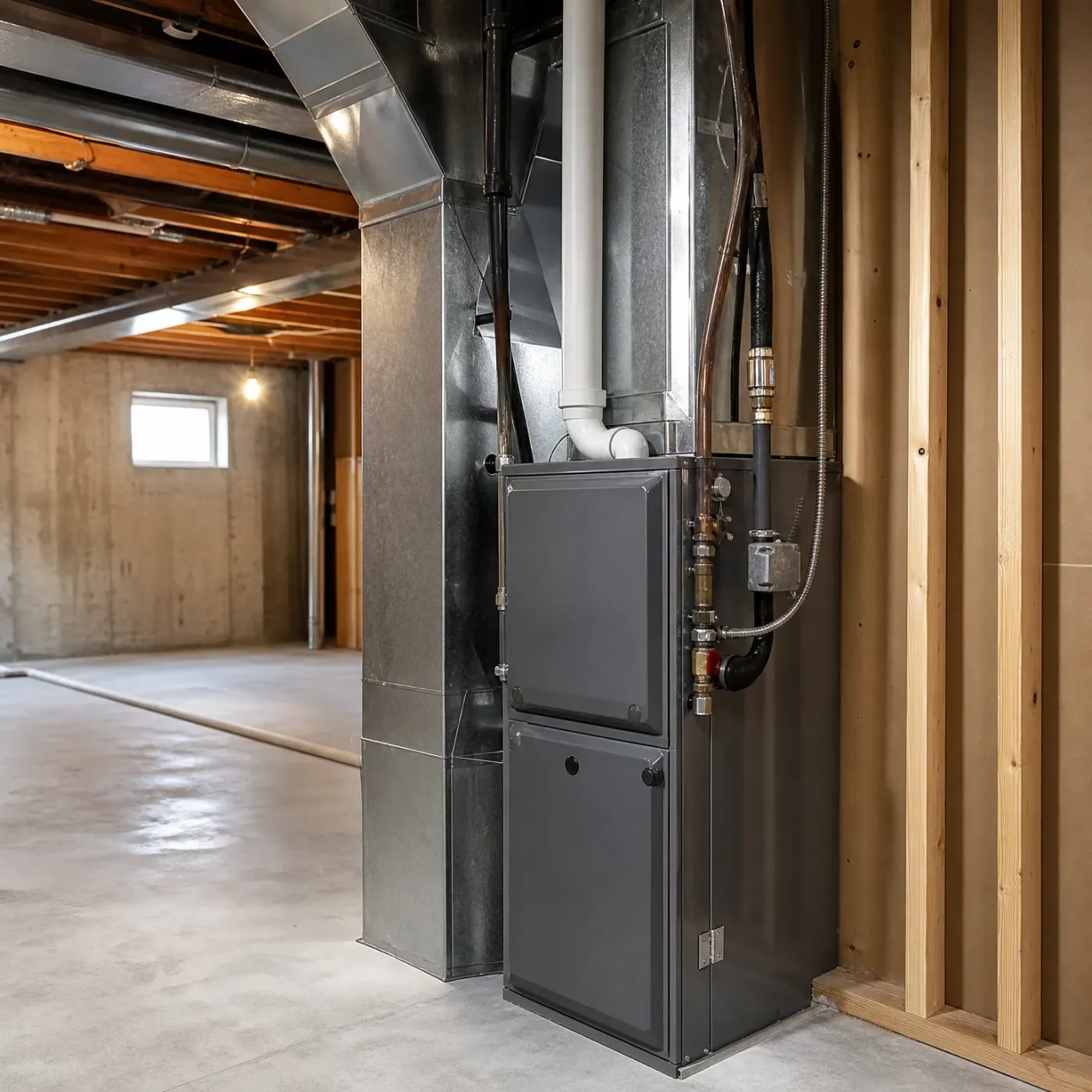
A gray high-efficiency furnace with two access panels stands in a bare basement corner, connected to sheet-metal ductwork, white PVC vent pipes, and flexible gas and electrical lines.

The limit switch has a job

Every gas furnace has a high limit switch mounted near the burners. It shuts the gas valve if the air inside the cabinet gets too hot, which protects the heat exchanger from cracking. If your blower motor is weak or a dirty filter is choking airflow, heat builds up faster than it escapes. The limit switch can end up cycling the burners on and off rapidly, or masking a furnace that won't stop firing until something else trips it.

A gas furnace with metal ductwork, copper and yellow gas piping stands against a wall in an empty room with a bare concrete floor.

Idaho winters push it harder

Your furnace in Idaho runs for months straight through winter, firing on and off dozens of times a day. A flame sensor or thermostat that's slightly off barely shows itself in October. By January, with the burners working to keep up against real cold, that same small problem turns into a furnace that won't shut off, because the system has far less margin for error once outside temperatures drop.

Could the ductwork itself be making my furnace run nonstop?

You've already checked the thermostat and the filter, and someone mentioned the ducts themselves could be part of why the furnace won't quit. It's a fair question. Idaho homes run long duct runs to reach every room, and if air isn't making it back to the furnace the way it should, the system has no way of knowing the house is actually warm.

Yes, if the ducts are blocked, crushed, or undersized for the furnace

A furnace moves a set amount of air every cycle. If a duct is crushed, disconnected, or a return is blocked by furniture or a closed door, less air gets pushed through, and the rooms take longer to warm. The thermostat keeps calling for heat because it hasn't reached its setpoint yet, so the furnace keeps firing. Supply ducts that are too small for the furnace cause the same problem from the other direction, pushing the blower harder without moving the air where it needs to go. None of this is something to guess at from the thermostat. A contractor can check airflow at the registers and trace it back to find where the duct run is actually losing ground.

A middle-aged woman with shoulder-length dark hair, wearing a gray cardigan over a cream top, sits in an upholstered armchair and looks toward a sunlit window, with a shelf holding framed pictures and a plant behind her.
A woman and a child wrapped together in a knitted gray blanket on a couch, with the child's head resting on her shoulder and a lit table lamp and houseplant in the background.
A gray furnace with copper and flexible piping stands against a wood-framed wall in an unfinished basement, connected to galvanized sheet-metal ductwork and PVC venting, with a concrete floor and exposed joists.

A pro who works on furnaces

The pro who reaches out is licensed in Idaho.

A local pro who knows furnaces gets your details and gets in touch.

Reach a local pro

It costs nothing to send, and you don't have to hire anyone.

Check it yourself or call it in

Fix it yourself

  • A new thermostat battery or a filter swap takes a few minutes and costs you almost nothing.
  • You can see right away if a dirty filter was choking airflow and making the furnace overcompensate.
  • You have no way to test the limit switch, the flame sensor, or the control board without the right meter.
  • Guessing wrong means the furnace keeps running the way it has been, and the heat exchanger keeps taking the strain.
  • If the real problem is a cracked heat exchanger, nothing you do at home will catch that before it becomes dangerous.

Call someone licensed

  • A gas furnace technician in Idaho who works this equipment all winter has already seen the usual causes behind a furnace that won't shut off.
  • Testing the limit switch, the flame sensor, and the control board needs equipment and training most homeowners don't have.
  • A licensed tech can tell you in one visit whether it's a bad sensor, a stuck relay, or something inside the heat exchanger.
  • You get matched with one contractor local to you, not a handful of companies competing for the same call.
  • A furnace that's been overfiring for weeks needs someone who can check the heat exchanger itself, not just reset the thermostat.
A gray high-efficiency furnace with white PVC vent pipes stands on a concrete pad in a basement, beside sheet-metal ductwork, copper piping and a poured concrete wall with wood framing at left.

Running the way it should

The burners fire, the blower pushes warm air through the ducts, and once your rooms hit the setpoint, everything shuts off. The cabinet stays quiet in between calls for heat. Gas lines, condensate pipes, and the connections around the unit stay untouched because nothing's working hard enough to need attention.


A beige gas furnace in a basement with a metal flue pipe, galvanized sheet-metal ductwork to its left, and gas and water pipes along the concrete wall to its right.

Won't shut off

The flue keeps venting long after the house should be warm, and the burners are still firing. Someone needs to check the limit switch, the flame sensor, and the shutoff valves nearby to find out why the board isn't getting the signal to stop. Left alone, that heat exchanger takes the wear.

Winter nights average 22°F statewide

Those overnight lows mean your furnace is firing most of the night, every night, for months. If it's not shutting off when it should, you're not just running it longer, you're running it on top of an already long winter workload.

NOAA nClimDiv 1991-2020 county normals weighted by homes

A gray high-efficiency furnace stands on a concrete basement floor beside sheet-metal ductwork, with white PVC vent pipes and a black flexible line running up to exposed wood floor joists, next to a wood-framed post against a concrete wall.

Cycling off like it should

The burners fire, the blower sends warm air through the ducts, and the cabinet goes quiet once the rooms hit setpoint. The flue and condensate pipes run clear and dry between calls. Nothing is firing when no one asked it to.

A beige metal furnace with a louvered front panel stands on a concrete floor against a concrete wall, connected to galvanized sheet-metal ductwork and a metal pipe.

Running long after it should have stopped

The burners are still going well past the point the house feels warm. On an older unit like this, a stuck gas valve or a flame sensor that's not reading right can keep it firing. Left alone, that's wear on a heat exchanger that doesn't get a break.

A woman in a cream sweater and jeans stands in the open doorway of a white stucco house, holding the dark door, while a man in a dark quilted jacket seen from behind walks toward the entry past potted plants.

A furnace that won't shut off needs a hand, not a guess

You've got a good idea now of what's keeping those burners firing past where they should. A dirty flame sensor, a stuck limit switch, a thermostat reading the room wrong, a blower that can't move enough air. The cause is almost always one of those, and finding which one means opening the cabinet and testing parts, not staring at the thermostat another night.

That's a job for someone who works on furnaces like yours all winter and knows which of those parts tends to go first in a house like yours. When you put in a request, you get matched with one licensed contractor local to Idaho, not a handful of companies competing for your callback. They'll reach out to you directly, already knowing what you've described, and take it from there.

Interior corner with a beige sofa holding a dark green and a light cushion and a textured throw, a potted small-leaved tree beside a white-framed window, and a dark shallow bowl on a wooden coffee table in the foreground.
A dimly lit unfinished basement with concrete walls and floor, exposed floor joists, a small window at left, and a dark furnace with PVC venting and sheet metal ductwork at right.

Get your furnace to the right pro

Only one pro gets your request, so you hear from one company.

Step 1 of 3: Equipment



