Tell us about the job
Takes about a minute. No obligation.
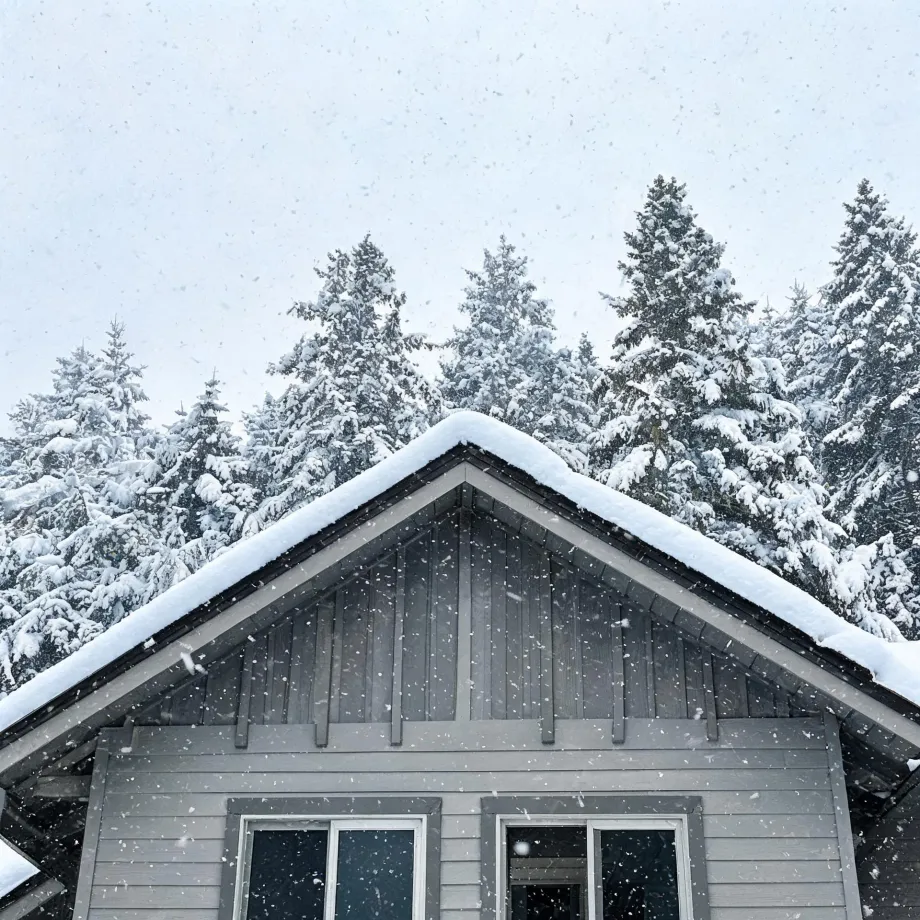
Sizing a furnace for a Cassia County home is not a generic exercise. Homes in Cassia County, ID run heat about ten months a year, from September through June. The burner and heat exchanger cycle through that load every year, and a unit that is undersized or poorly sealed at installation accumulates wear on those parts faster than the idle period can hide. A contractor quotes the load calculation first, before any equipment gets specified, because getting that number wrong here means the system runs harder than it was built for from day one.
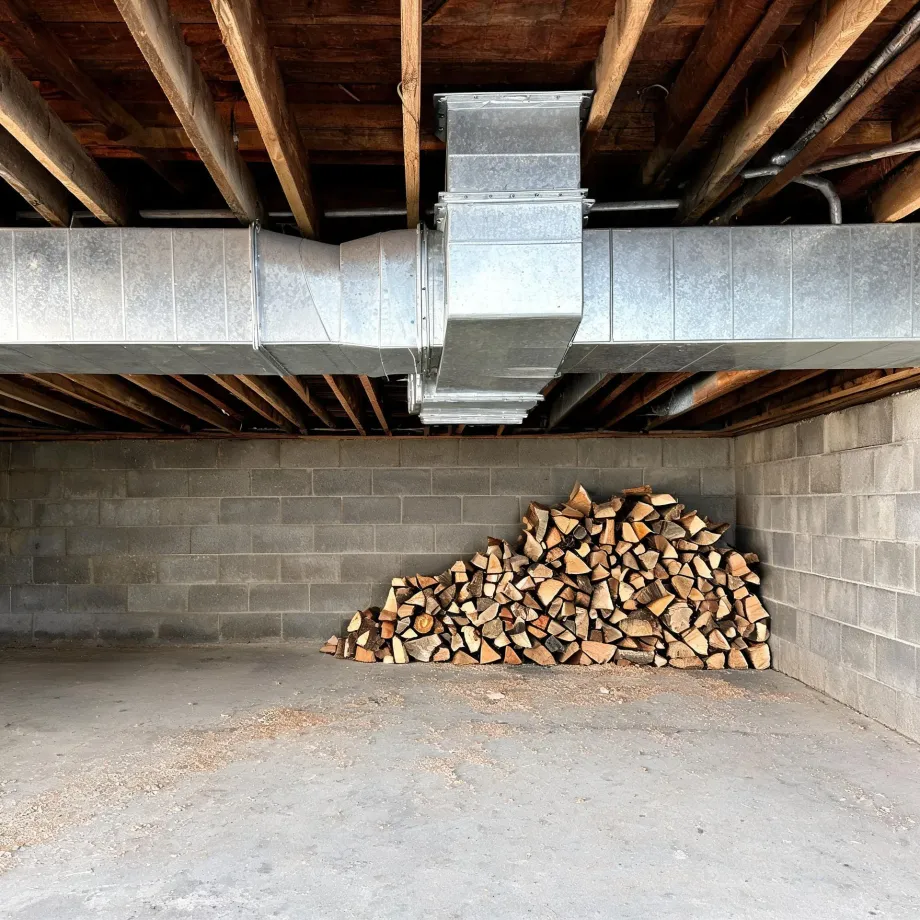
Ductwork laid in for a furnace that no longer exists is the constraint that shapes a new installation here. Half the homes in Cassia County, Idaho were built in 1975 or earlier (2020-2024 ACS 5-year). When a house has been re-equipped once or twice over the decades, the ducts threading through it reflect the original design, not the system a contractor is now putting in. A new furnace may push a different volume of air at different pressure, and ducts that were never sized for it become the first thing to evaluate before the electrical draw even comes into the picture.
What Gets Installed With a New Furnace
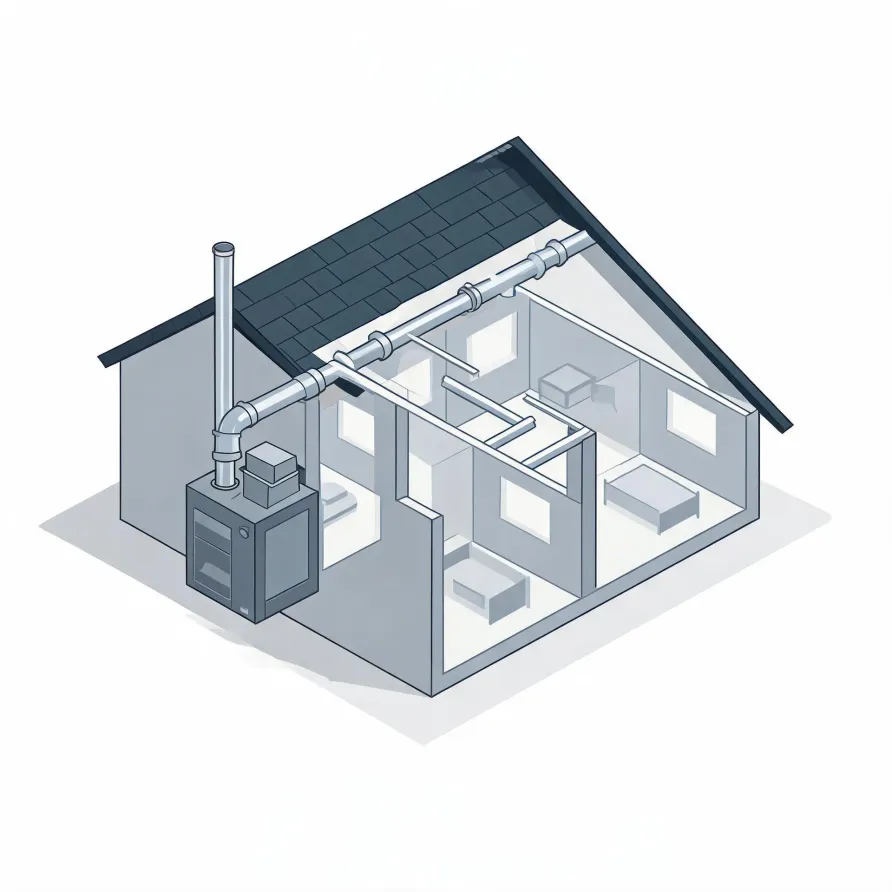
The furnace itself sits in a mechanical room, basement, or utility closet and is the box that produces heat. A heat exchanger inside it transfers combustion heat to the air your home circulates. The burner assembly and the blower motor both live inside that same cabinet, one producing the heat and the other pushing conditioned air out.
The flue pipe runs from the furnace up and out of the house, carrying combustion gases away. Alongside it, the contractor installs a new thermostat on an interior wall where it can read the living space accurately, and a fresh air intake if the unit requires one to draw outside air for combustion.
The drawing shows the general layout of these components, and a licensed contractor determines exactly how they apply to your house.
Find a contractor in Cassia CountyCassia County, by the numbers
152 severe weather events were recorded in Cassia County, Idaho between 2015 and 2024.
NOAA National Centers for Environmental Information, Storm Events Database, bulk CSV export, events 2015-01-01 through 2024-12-31.Half the homes in Cassia County, Idaho were built in 1975 or earlier (2020-2024 ACS 5-year).
U.S. Census Bureau, 2020-2024 American Community Survey 5-Year EstimatesCassia County, Idaho holds 9,096 housing units (2020-2024 ACS 5-year).
U.S. Census Bureau, 2020-2024 American Community Survey 5-Year EstimatesOwners occupy 68.6% of the occupied homes in Cassia County, Idaho (2020-2024 ACS 5-year).
U.S. Census Bureau, 2020-2024 American Community Survey 5-Year EstimatesCodes & Standards Behind Furnace Installation in Cassia County, Idaho5 sourced rules and standards
What happens once a contractor is on the job
Non-weatherized gas furnaces manufactured on or after November 19, 2015 must reach 80.0 percent AFUE.
Non-weatherized oil-fired furnaces manufactured on or after November 19, 2015 must reach 83.0 percent AFUE.
Mobile home gas furnaces manufactured on or after November 19, 2015 must reach 80.0 percent AFUE.
Non-weatherized gas furnaces manufactured on or after December 18, 2028 must reach 95.0 percent AFUE, up from the 80.0 percent minimum that applies to units manufactured before that date.
Licensing Rules for Cassia County, Idaho
Idaho requires a state certificate of competency for heating, ventilation and air conditioning work: it is unlawful to engage in the business, trade or practice without passing the examination and holding the certificate.
Severe Weather Events in Cassia County
Extreme weather puts real demands on heating equipment, from how hard a furnace works through a cold snap to how often components wear under repeated stress cycles. What the climate does in your area shapes what a properly sized, properly installed furnace needs to handle.
152 severe weather events, 2015–2024. Source: NOAA National Centers for Environmental Information, Storm Events Database.