Tell us about the job
Takes about a minute. No obligation.
The burner and ignition system on a furnace in Oneida County cycle hard across a long stretch of the calendar, and the wear shows in those parts first. Homes in Oneida County, ID run heat about ten months a year, from September through June. A contractor working a repair here checks the heat exchanger and igniter early, because that is where accumulated cycling leaves its mark. Cracks in the heat exchanger and a weakened igniter are the failure modes that a furnace running most of the year surfaces before anything else does.
Ductwork in houses this old was sized and routed for equipment that has not been manufactured for a long time. Half the homes in Oneida County, Idaho were built in 1971 or earlier (2020-2024 ACS 5-year). When a contractor opens a furnace here and identifies a failed component, the question that follows is whether that part still has a supply chain behind it. If it does not, the repair scope changes before a price can be set. That is the variable that drives the job in stock like this, not the diagnosis itself, which is usually straightforward, but what the opened system turns out to require.
The Parts of a Furnace a Contractor Checks First
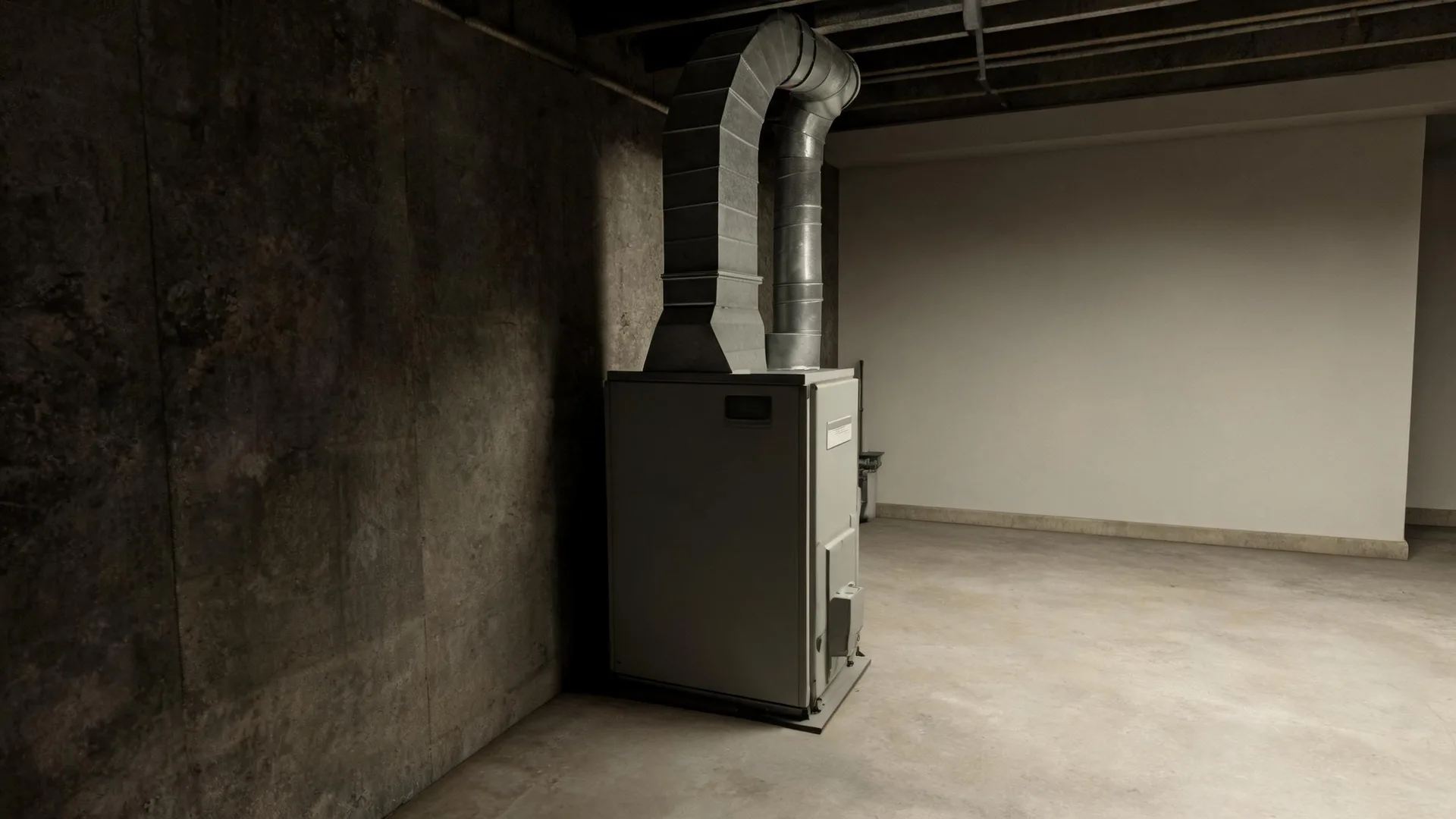
The furnace itself sits in a utility room, basement, or closet and is the piece a contractor looks at before anything else. Inside it, the heat exchanger and burner assembly are the most common sources of trouble. A cracked heat exchanger, a dirty burner, or a failed igniter each shows up in a distinct way, and a contractor reads those signs before touching anything else.
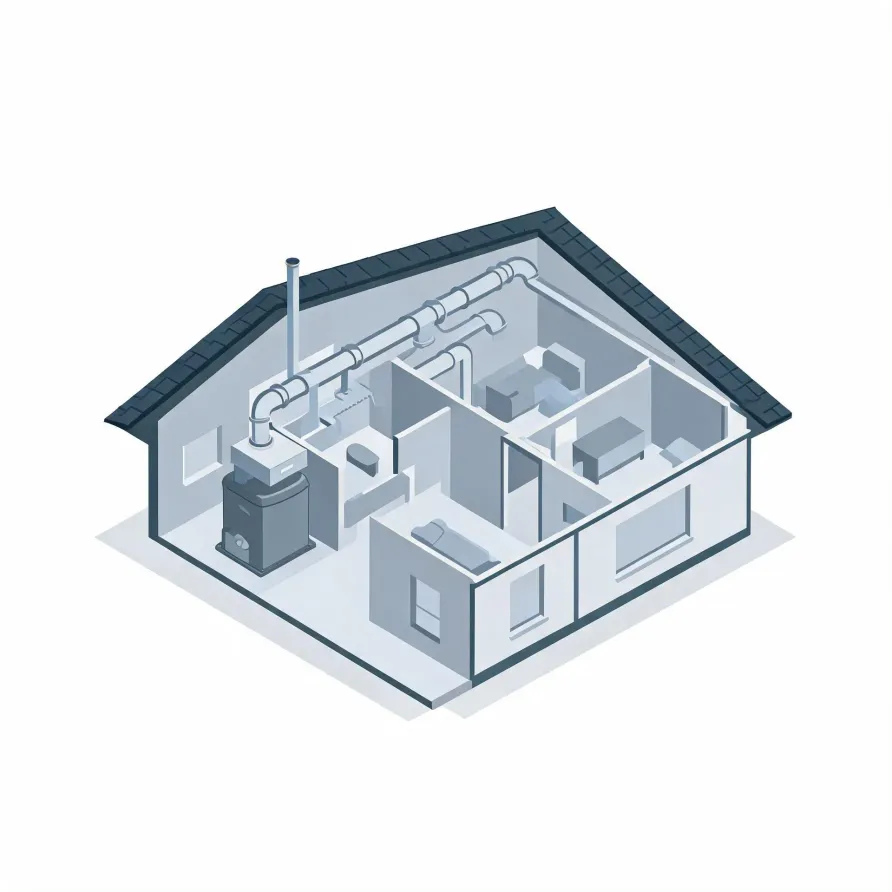
The blower motor and its fan sit inside the furnace cabinet and push conditioned air into the duct system. Alongside them, the flue pipe runs from the cabinet to an exterior wall or through the roof, carrying combustion gases out. The thermostat wires back to the furnace and tells it when to fire, so a fault there can look like a furnace problem even when the furnace itself is fine.
The drawing shows a typical furnace layout, and a licensed contractor determines which parts apply to your specific system and what work, if any, they require.
Find a contractor in Oneida CountyOneida County, by the numbers
78 severe weather events were recorded in Oneida County, Idaho between 2015 and 2024.
NOAA National Centers for Environmental Information, Storm Events Database, bulk CSV export, events 2015-01-01 through 2024-12-31.Half the homes in Oneida County, Idaho were built in 1971 or earlier (2020-2024 ACS 5-year).
U.S. Census Bureau, 2020-2024 American Community Survey 5-Year EstimatesOneida County, Idaho holds 2,101 housing units (2020-2024 ACS 5-year).
U.S. Census Bureau, 2020-2024 American Community Survey 5-Year EstimatesOwners occupy 88.3% of the occupied homes in Oneida County, Idaho (2020-2024 ACS 5-year).
U.S. Census Bureau, 2020-2024 American Community Survey 5-Year EstimatesFurnace Repair Rules & Codes for Oneida County, Idaho5 sourced standards and statutes
What Happens When the Contractor Arrives
Non-weatherized gas furnaces manufactured on or after November 19, 2015 must reach 80.0 percent AFUE.
Non-weatherized oil-fired furnaces manufactured on or after November 19, 2015 must reach 83.0 percent AFUE.
Mobile home gas furnaces manufactured on or after November 19, 2015 must reach 80.0 percent AFUE.
Non-weatherized gas furnaces manufactured on or after December 18, 2028 must reach 95.0 percent AFUE, up from the 80.0 percent minimum that applies to units manufactured before that date.
Licensing and Legal Requirements in Oneida County, Idaho
Idaho requires a state certificate of competency for heating, ventilation and air conditioning work: it is unlawful to engage in the business, trade or practice without passing the examination and holding the certificate.
Severe Weather Events in Oneida County
Hard weather puts real load on a furnace. Every event the chart records is a moment the heating system in this county was asked to perform under pressure, which is exactly when deferred wear becomes a repair call.
78 severe weather events, 2015–2024. Source: NOAA National Centers for Environmental Information, Storm Events Database.