Tell us about the job
Takes about a minute. No obligation.
Sizing a furnace for a house in Shoshone County starts with how hard the burner is asked to work and for how long. Homes in Shoshone County, ID run heat about ten months a year, from September through June. The heat exchanger, the burner assembly, and the ignition system all accumulate wear across those cycles, and a unit that is undersized for the load or poorly sealed at the plenum puts that stress on parts that have little idle time to recover. A contractor pricing a new install here calculates the load before anything else, because an undersized unit runs longer per cycle and compounds the wear the season already demands.
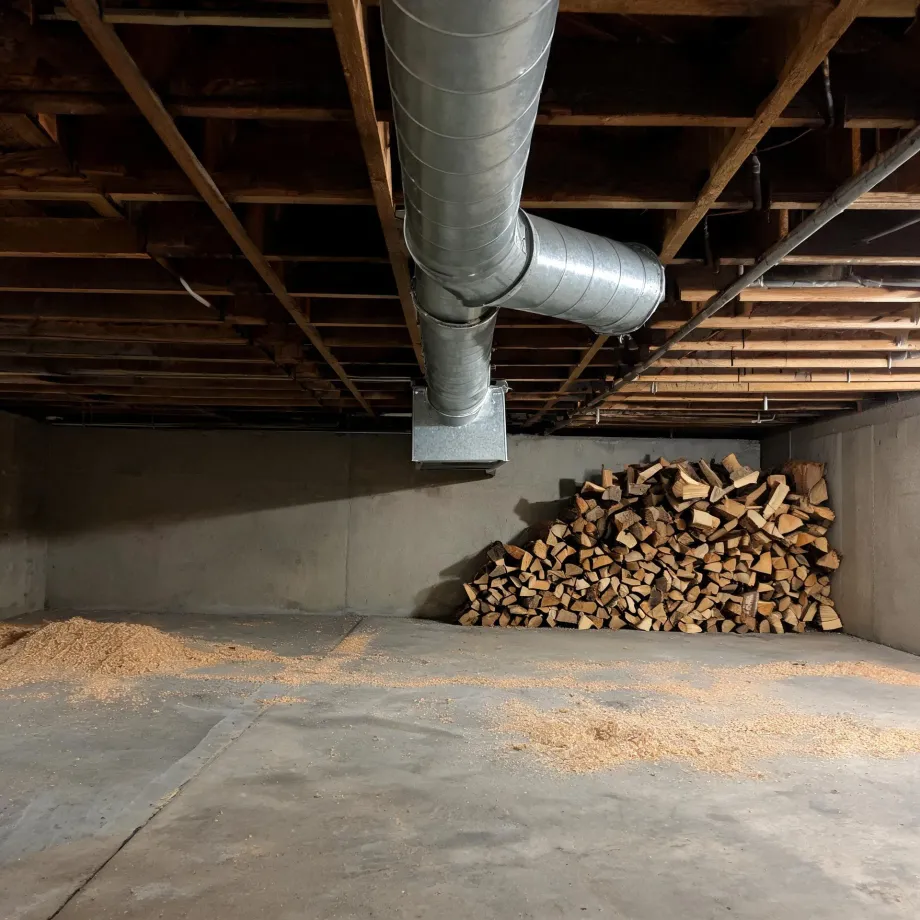
Ductwork laid out for a different system entirely is what a contractor runs into in a significant share of Shoshone County jobs. Half the homes in Shoshone County, Idaho were built in 1959 or earlier (2020-2024 ACS 5-year). Trunks routed for the equipment of that era follow the geometry of a house that was never drawn with a modern furnace in mind, and the runs, the returns, and the branch sizing reflect that. A contractor quoting a furnace replacement here prices the duct system as a separate question from the unit, because what is in the walls and the crawlspace determines how the job actually goes.
What Gets Installed With a New Furnace
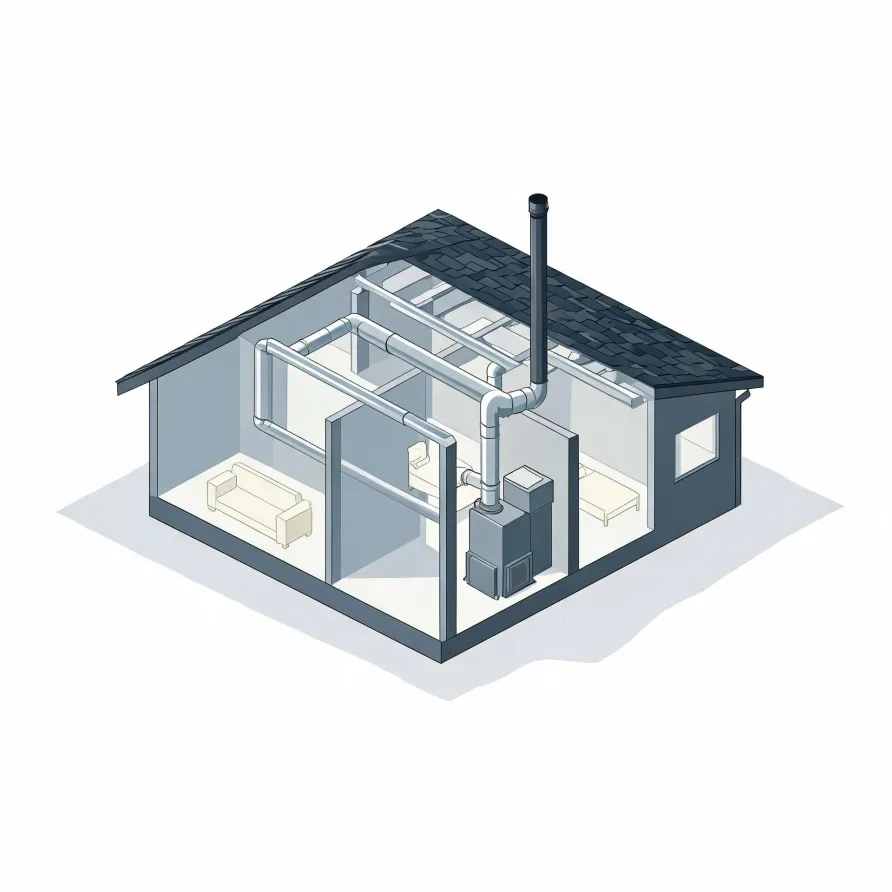
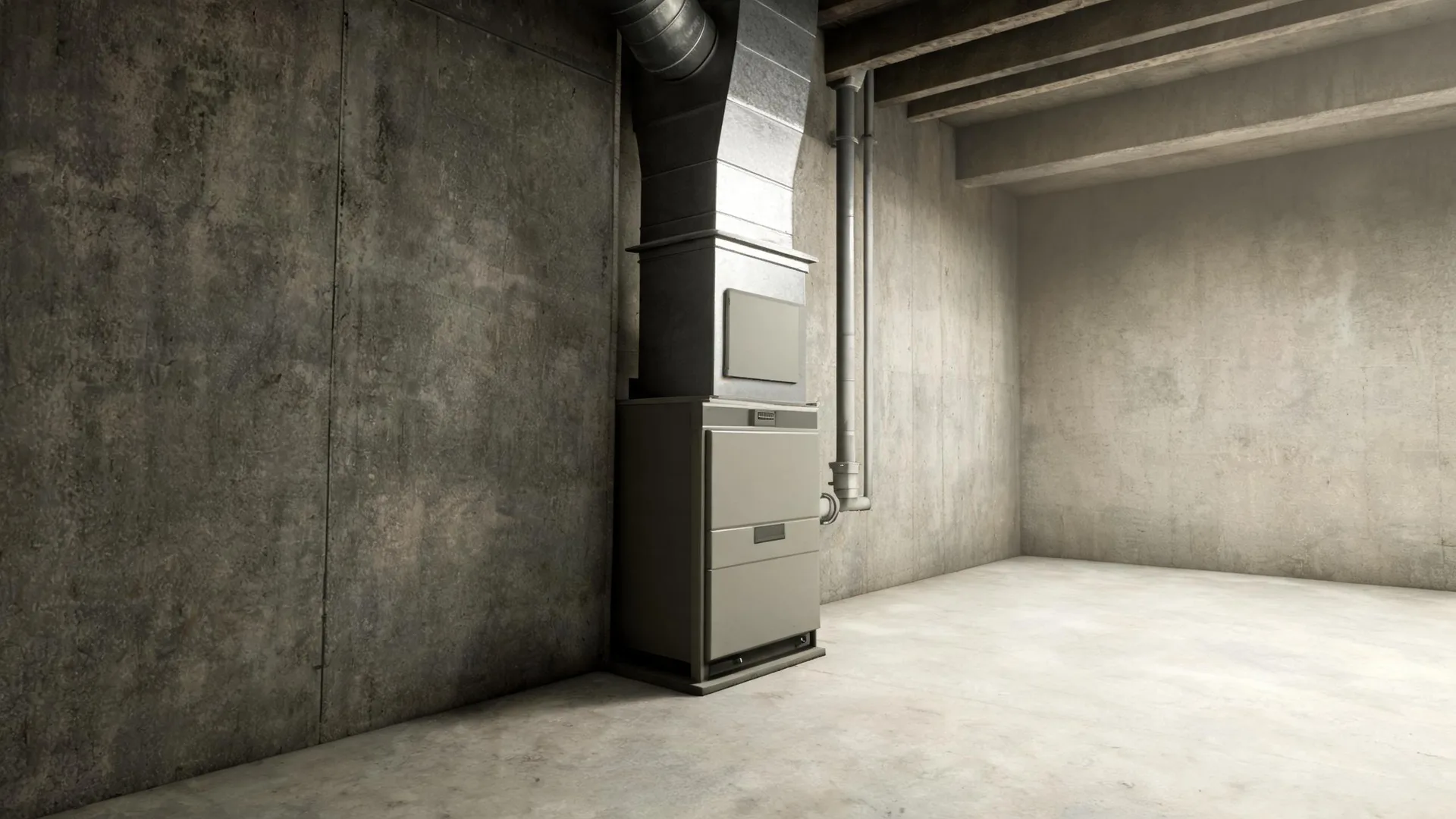
The furnace itself sits inside the house, most often in a basement, utility closet, or mechanical room. It holds the burner assembly, the heat exchanger, and the blower. The burner produces heat, the exchanger transfers it to the air stream, and the blower pushes that air out through the supply side of the system.
The flue pipe runs from the furnace to an exterior wall or up through the roof, carrying combustion gases out of the house. Alongside it, the contractor installs a new thermostat on an interior wall to give the home a control point, and a condensate drain line where the equipment requires one.
The drawing shows a typical layout, and a licensed contractor determines exactly what applies to this house.
Find a contractor in Shoshone CountyShoshone County, by the numbers
205 severe weather events were recorded in Shoshone County, Idaho between 2015 and 2024.
NOAA National Centers for Environmental Information, Storm Events Database, bulk CSV export, events 2015-01-01 through 2024-12-31.Half the homes in Shoshone County, Idaho were built in 1959 or earlier (2020-2024 ACS 5-year).
U.S. Census Bureau, 2020-2024 American Community Survey 5-Year EstimatesShoshone County, Idaho holds 7,049 housing units (2020-2024 ACS 5-year).
U.S. Census Bureau, 2020-2024 American Community Survey 5-Year EstimatesOwners occupy 74.0% of the occupied homes in Shoshone County, Idaho (2020-2024 ACS 5-year).
U.S. Census Bureau, 2020-2024 American Community Survey 5-Year EstimatesCodes & Standards Behind Furnace Installation in Shoshone County, Idaho5 sourced rules and standards
What the installation actually looks like
Non-weatherized gas furnaces manufactured on or after November 19, 2015 must reach 80.0 percent AFUE.
Non-weatherized oil-fired furnaces manufactured on or after November 19, 2015 must reach 83.0 percent AFUE.
Mobile home gas furnaces manufactured on or after November 19, 2015 must reach 80.0 percent AFUE.
Non-weatherized gas furnaces manufactured on or after December 18, 2028 must reach 95.0 percent AFUE, up from the 80.0 percent minimum that applies to units manufactured before that date.
Licensing Rules for Shoshone County, Idaho
Idaho requires a state certificate of competency for heating, ventilation and air conditioning work: it is unlawful to engage in the business, trade or practice without passing the examination and holding the certificate.
Weather Stress on Heating Systems in Shoshone County
Heating equipment in northern Idaho works against real outdoor conditions, and those conditions shape how hard a furnace has to run and how long it holds up. A chart of recorded severe weather events in the area gives contractors a concrete picture of what the local climate asks of installed equipment.
205 severe weather events, 2015–2024. Source: NOAA National Centers for Environmental Information, Storm Events Database.