Tell us about the job
Takes about a minute. No obligation.
Sizing a furnace for a house in Benewah County means accounting for a heating demand that runs almost the full calendar year. Homes in Benewah County, ID run heat about ten months a year, from September through June. The burner and heat exchanger cycle through that entire stretch, and a system that is even modestly undersized accumulates wear at a pace a contractor can measure in premature cracks and ignition failures. A careful load calculation before the install is what keeps a replacement furnace from arriving at the same problems faster than the one it replaced.
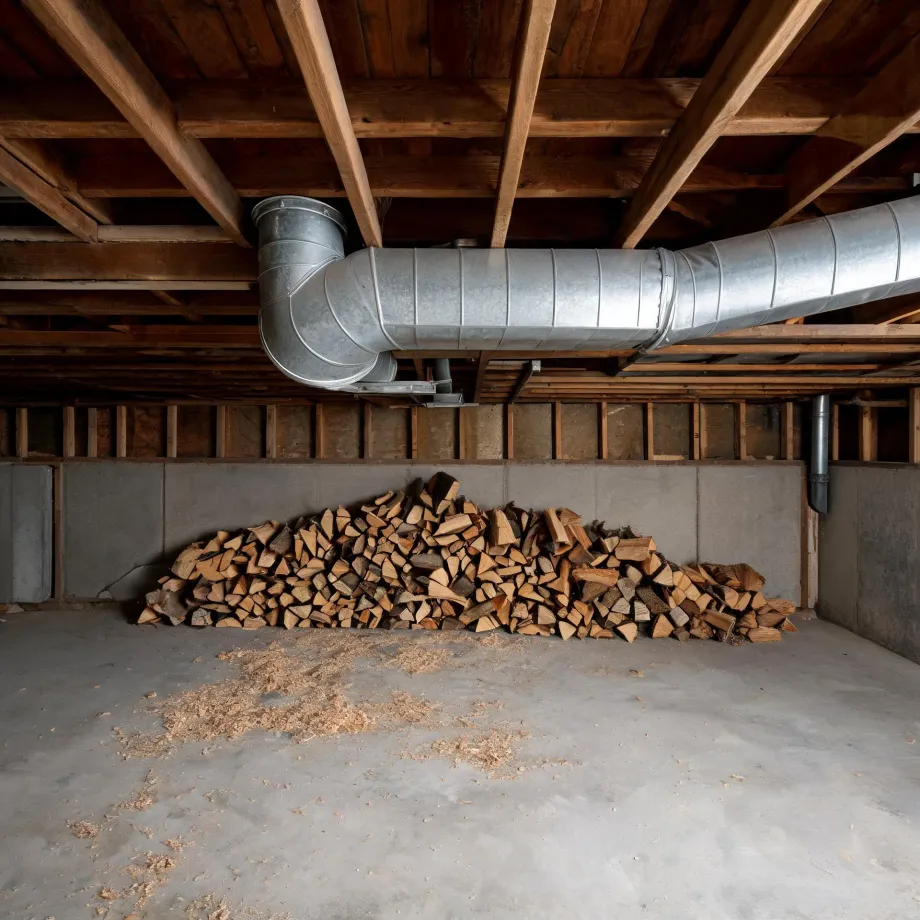
Older ductwork does not simply carry a new furnace. Half the homes in Benewah County, Idaho were built in 1979 or earlier (2020-2024 ACS 5-year). Houses built to that point were typically laid out for gravity or early forced-air systems, and what a contractor finds in the walls and crawlspace decides whether the existing runs can carry a modern unit's airflow or need to be revised. The electrical is its own question too, since service panels in that generation of housing were sized for loads smaller than what a new furnace and its air handler draw. Both get assessed before anything is priced.
What Gets Installed With a New Furnace
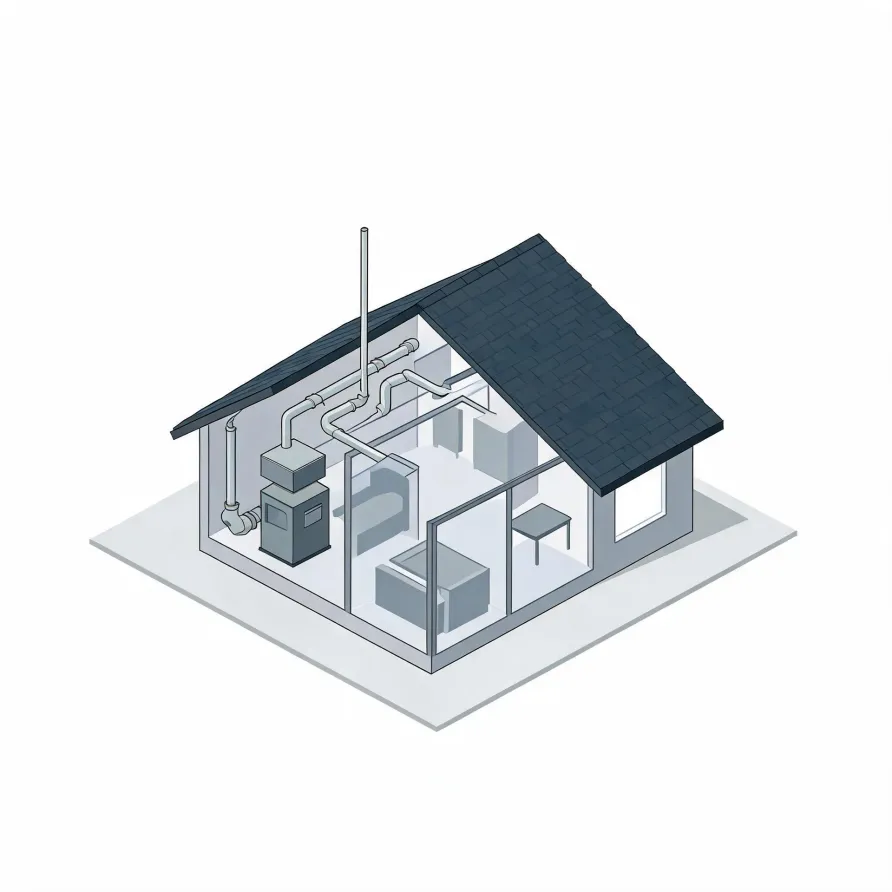
The furnace itself sits in a utility room, basement, or closet and is the unit that generates heat. A heat exchanger inside it warms the air that moves through the house, and a blower motor pushes that air out. The flue pipe exits through a wall or roof and carries combustion gases out of the home.
The thermostat mounts on a wall in the living area and is the control point the homeowner interacts with every day. A contractor also installs or connects the gas line at the furnace, along with a drain line if the unit is a condensing model, and an air filter housing where the return air enters the unit.
The drawing shows a typical layout, and a licensed contractor determines exactly what applies to your house and its configuration.
Find a contractor in Benewah CountyBenewah County, by the numbers
274 severe weather events were recorded in Benewah County, Idaho between 2015 and 2024.
NOAA National Centers for Environmental Information, Storm Events Database, bulk CSV export, events 2015-01-01 through 2024-12-31.Half the homes in Benewah County, Idaho were built in 1979 or earlier (2020-2024 ACS 5-year).
U.S. Census Bureau, 2020-2024 American Community Survey 5-Year EstimatesBenewah County, Idaho holds 4,757 housing units (2020-2024 ACS 5-year).
U.S. Census Bureau, 2020-2024 American Community Survey 5-Year EstimatesOwners occupy 73.2% of the occupied homes in Benewah County, Idaho (2020-2024 ACS 5-year).
U.S. Census Bureau, 2020-2024 American Community Survey 5-Year EstimatesCodes & Standards for Furnace Installation in Benewah County, Idaho5 sourced rules and standards
What the Installation Actually Looks Like
Non-weatherized gas furnaces manufactured on or after November 19, 2015 must reach 80.0 percent AFUE.
Non-weatherized oil-fired furnaces manufactured on or after November 19, 2015 must reach 83.0 percent AFUE.
Mobile home gas furnaces manufactured on or after November 19, 2015 must reach 80.0 percent AFUE.
Non-weatherized gas furnaces manufactured on or after December 18, 2028 must reach 95.0 percent AFUE, up from the 80.0 percent minimum that applies to units manufactured before that date.
Licensing and Legal Requirements in Benewah County, Idaho
Idaho requires a state certificate of competency for heating, ventilation and air conditioning work: it is unlawful to engage in the business, trade or practice without passing the examination and holding the certificate.
Severe Weather Events in Benewah County
Benewah County weather puts real demand on residential heating equipment. A furnace sized and installed for local conditions holds up differently than one that was not, and that gap shows up over the life of the unit.
274 severe weather events, 2015–2024. Source: NOAA National Centers for Environmental Information, Storm Events Database.