Tell us about the job
Takes about a minute. No obligation.
A furnace repair in Ada County starts with what the burner and heat exchanger have already been through. Homes in Ada County, ID run heat about eight months a year, from October through May. Cycling on and off across that stretch puts repetitive stress on the ignition system and the heat exchanger specifically, and cracks or fatigue in those parts are what a contractor finds first when a system has been running hard. A furnace that was undersized or poorly sealed at installation has nowhere to hide that history, and it shows up in the repair scope before it shows up on the quote.
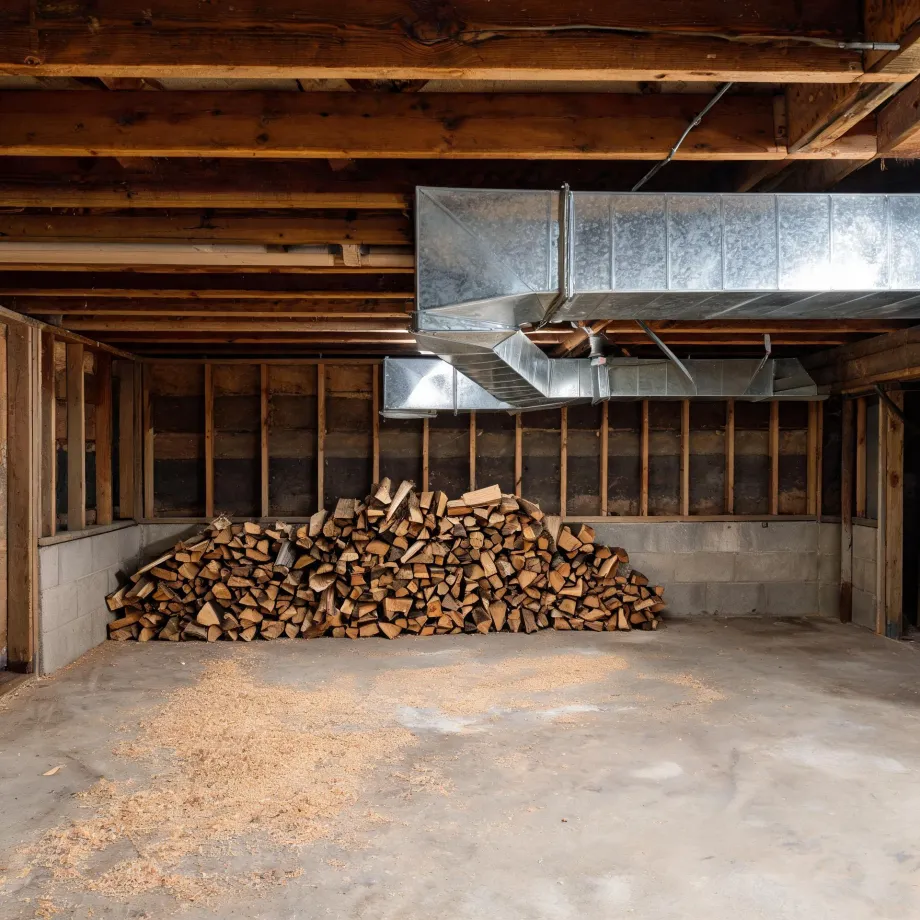
Ductwork in a house this age has a history the furnace does not always show on its own. Half the homes in Ada County, Idaho were built in 1997 or earlier (2020-2024 ACS 5-year). A contractor who opens the furnace and finds a failed heat exchanger or a worn inducer motor still has to account for what is distributed through the rest of the system: buildup, collapsed flex runs, leaking joints that were never sealed to begin with. The repair at the unit can be straightforward; what the ductwork has done to airflow and static pressure over that same span is what determines whether the fix holds.
The Parts of a Furnace a Contractor Checks First
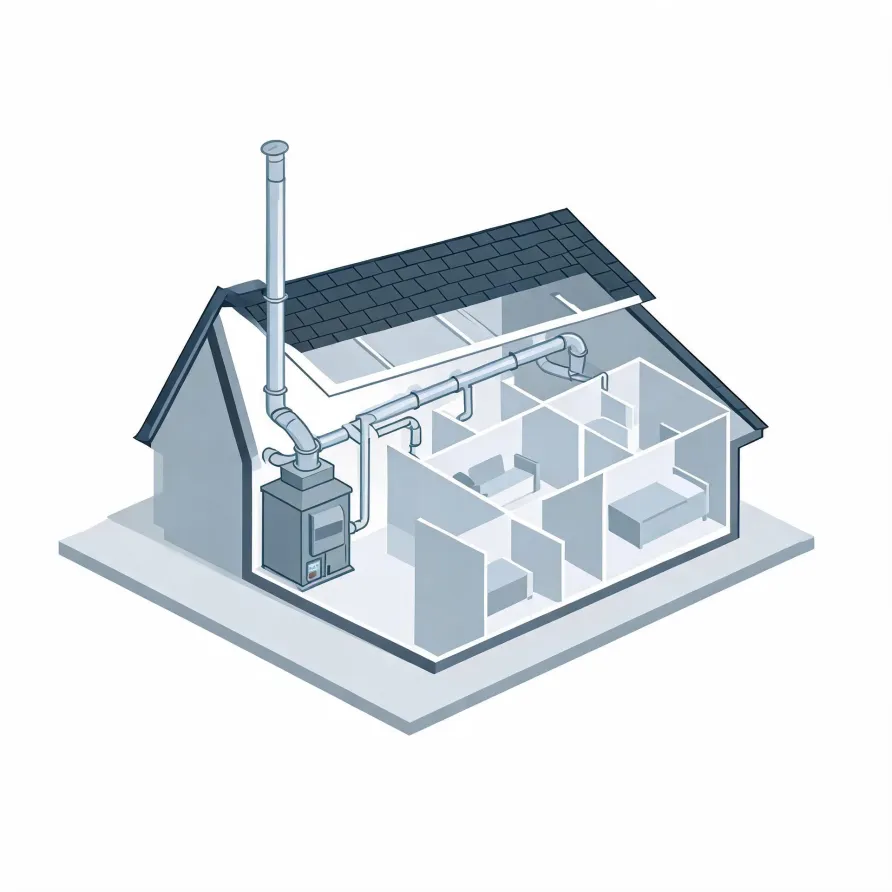
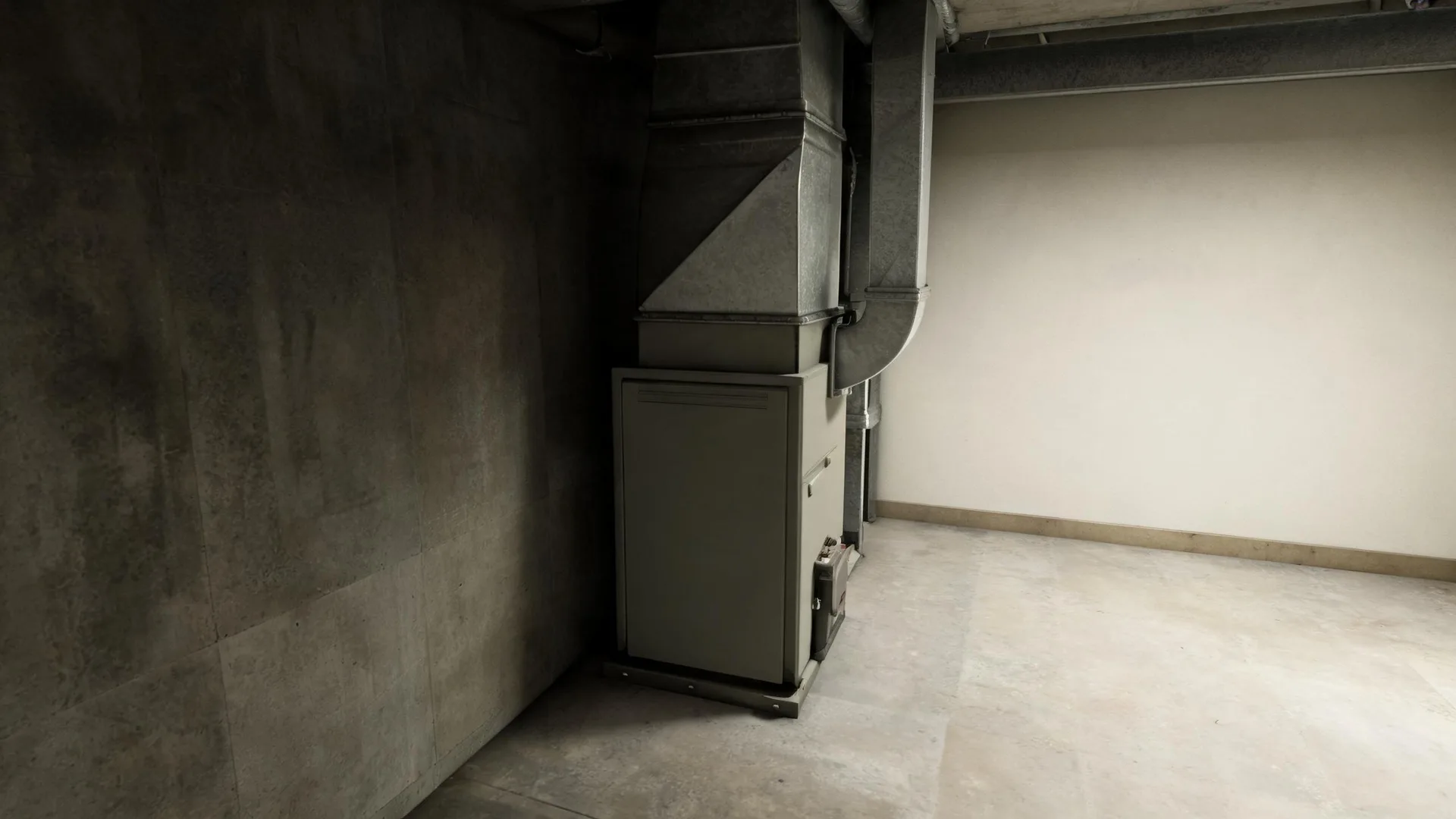
The furnace itself sits in a utility room, basement, or closet and is the piece a contractor goes to first. Inside it, the heat exchanger is the part most likely to be at fault when the system blows cold air or shuts down unexpectedly. The burner assembly, which sits just below it, is where fuel ignites, and a failed ignitor or dirty burner is one of the first things a contractor will inspect.
The blower motor pushes conditioned air out through the house and pulls return air back in. When it fails or runs weakly, rooms go cold even if the burner is working fine. The flue pipe exits the cabinet and vents combustion gases outside, and a contractor checks it for blockages or cracks that can cause the system to trip its safety switches.
The drawing shows the general layout of a furnace system, and a licensed contractor determines which components apply to your specific home and situation.
Find a contractor in Ada CountyAda County, by the numbers
76 severe weather events were recorded in Ada County, Idaho between 2015 and 2024.
NOAA National Centers for Environmental Information, Storm Events Database, bulk CSV export, events 2015-01-01 through 2024-12-31.Half the homes in Ada County, Idaho were built in 1997 or earlier (2020-2024 ACS 5-year).
U.S. Census Bureau, 2020-2024 American Community Survey 5-Year EstimatesAda County, Idaho holds 211,440 housing units (2020-2024 ACS 5-year).
U.S. Census Bureau, 2020-2024 American Community Survey 5-Year EstimatesOwners occupy 70.8% of the occupied homes in Ada County, Idaho (2020-2024 ACS 5-year).
U.S. Census Bureau, 2020-2024 American Community Survey 5-Year EstimatesCodes & Standards Governing Furnace Repair in Ada County, Idaho5 sourced rules & standards
What the Repair Visit Looks Like
Non-weatherized gas furnaces manufactured on or after November 19, 2015 must reach 80.0 percent AFUE.
Non-weatherized oil-fired furnaces manufactured on or after November 19, 2015 must reach 83.0 percent AFUE.
Mobile home gas furnaces manufactured on or after November 19, 2015 must reach 80.0 percent AFUE.
Non-weatherized gas furnaces manufactured on or after December 18, 2028 must reach 95.0 percent AFUE, up from the 80.0 percent minimum that applies to units manufactured before that date.
What Ada County and Idaho Require for HVAC Repair
Idaho requires a state certificate of competency for heating, ventilation and air conditioning work: it is unlawful to engage in the business, trade or practice without passing the examination and holding the certificate.
Severe Weather Events in Ada County
Extreme weather puts real strain on heating equipment. Furnaces that run hard through punishing conditions wear faster and fail sooner, which is why local weather history is a practical part of understanding repair demand in Ada County.
76 severe weather events, 2015–2024. Source: NOAA National Centers for Environmental Information, Storm Events Database.