Tell us about the job
Takes about a minute. No obligation.
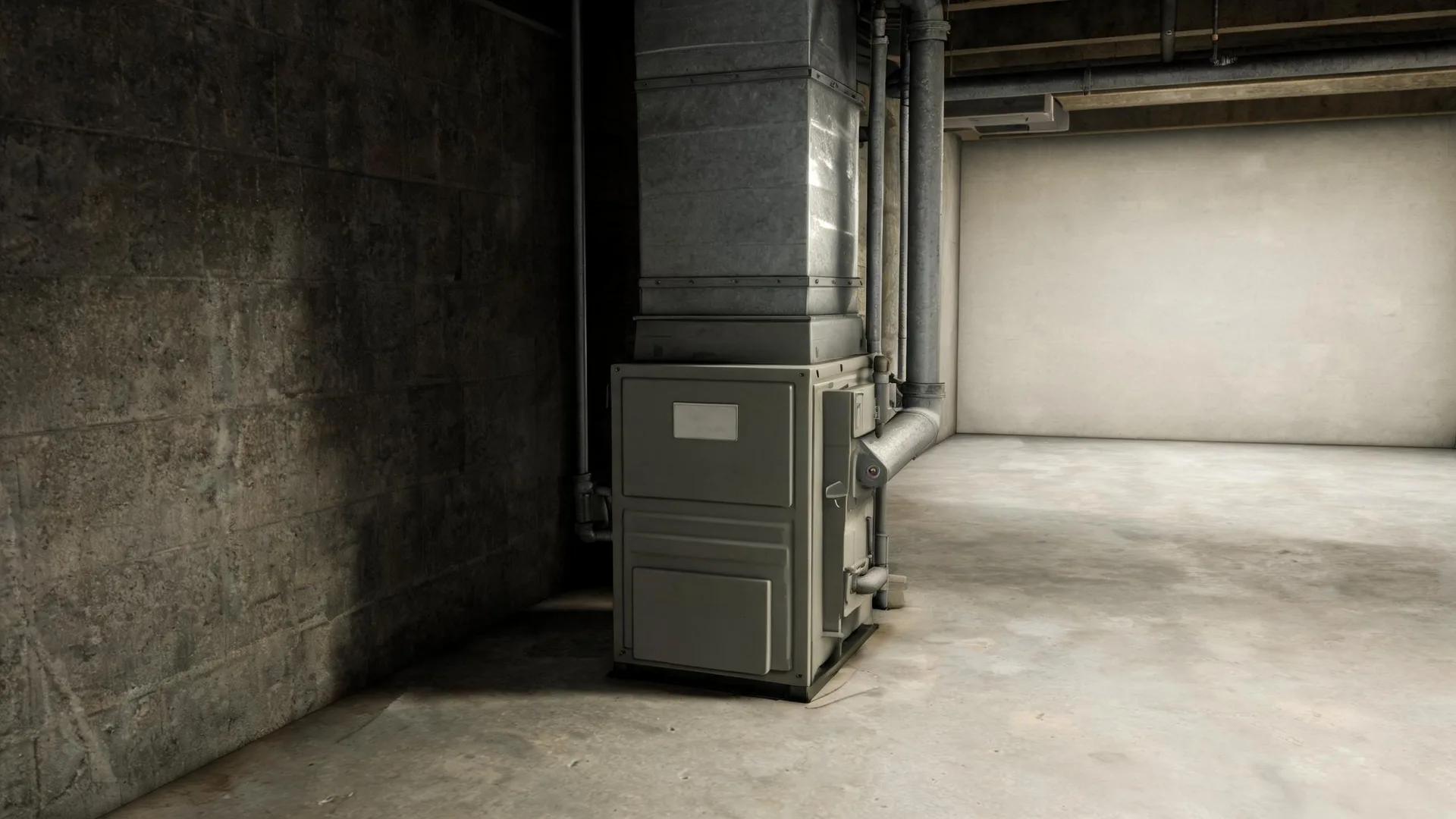
A furnace repair in Canyon County starts with what the burner and ignition system have already been through. Homes in Canyon County, ID run heat about eight months a year, from October through May. That much runtime concentrates wear on the parts that cycle every time the thermostat calls for heat: the igniter cracks, the heat exchanger fatigues, the flame sensor fouls. A contractor who skips past those components and chases an easier fix is likely to miss the real cause.
Furnace parts availability is the variable that most often decides how a repair job goes in Canyon County. Half the homes in Canyon County, Idaho were built in 1999 or earlier (2020-2024 ACS 5-year). Housing that age was built around equipment that manufacturers have long since moved past, and the furnace running in it today may be two or three replacement cycles removed from the original. When a contractor opens a unit, the question is whether the components it needs are still being made and where the nearest supply is. If they are not, the scope of the repair changes before a quote can be written.
The Parts of a Furnace a Contractor Checks First
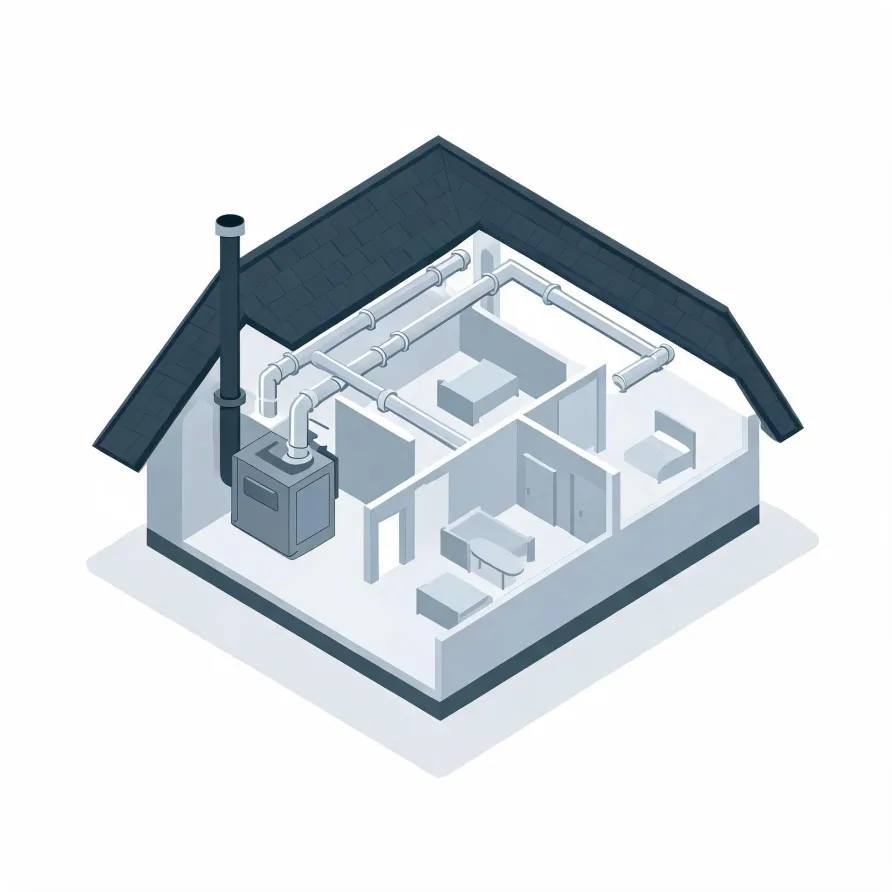
The furnace itself sits in a utility room, basement, or closet and is the piece a contractor goes to first. Inside it, the heat exchanger is the part most worth understanding: it separates combustion gases from the air your home breathes, and a crack there is one of the more serious failures a contractor will look for. The burners, which sit inside the heat exchanger assembly, are another early stop.
The blower motor sits at the base of the furnace cabinet and pushes conditioned air through the house. Near it, the inducer motor pulls combustion gases out through the flue before the burners even light. The control board ties those pieces together, and the igniter and flame sensor are small but pointed at quickly when a furnace runs short cycles or fails to light.
The drawing shows the general layout of a furnace system, and a licensed contractor determines what applies to the specific equipment and configuration in your house.
Find a contractor in Canyon CountyCanyon County, by the numbers
54 severe weather events were recorded in Canyon County, Idaho between 2015 and 2024.
NOAA National Centers for Environmental Information, Storm Events Database, bulk CSV export, events 2015-01-01 through 2024-12-31.Half the homes in Canyon County, Idaho were built in 1999 or earlier (2020-2024 ACS 5-year).
U.S. Census Bureau, 2020-2024 American Community Survey 5-Year EstimatesCanyon County, Idaho holds 89,135 housing units (2020-2024 ACS 5-year).
U.S. Census Bureau, 2020-2024 American Community Survey 5-Year EstimatesOwners occupy 75.5% of the occupied homes in Canyon County, Idaho (2020-2024 ACS 5-year).
U.S. Census Bureau, 2020-2024 American Community Survey 5-Year EstimatesCodes & Standards Governing Furnace Repair in Canyon County, Idaho5 sourced rules & standards
What Happens Once a Contractor Comes Out
Non-weatherized gas furnaces manufactured on or after November 19, 2015 must reach 80.0 percent AFUE.
Non-weatherized oil-fired furnaces manufactured on or after November 19, 2015 must reach 83.0 percent AFUE.
Mobile home gas furnaces manufactured on or after November 19, 2015 must reach 80.0 percent AFUE.
Non-weatherized gas furnaces manufactured on or after December 18, 2028 must reach 95.0 percent AFUE, up from the 80.0 percent minimum that applies to units manufactured before that date.
Licensing and Legal Requirements for HVAC Repair in Canyon County, Idaho
Idaho requires a state certificate of competency for heating, ventilation and air conditioning work: it is unlawful to engage in the business, trade or practice without passing the examination and holding the certificate.
Severe Weather Events in Canyon County
Hard weather puts real stress on heating equipment: cold snaps, power surges, and pressure swings all push furnaces to work harder and fail sooner. How often that kind of weather hits Canyon County shapes how much wear local furnaces carry and what repair work looks like here.
54 severe weather events, 2015–2024. Source: NOAA National Centers for Environmental Information, Storm Events Database.