Tell us about the job
Takes about a minute. No obligation.
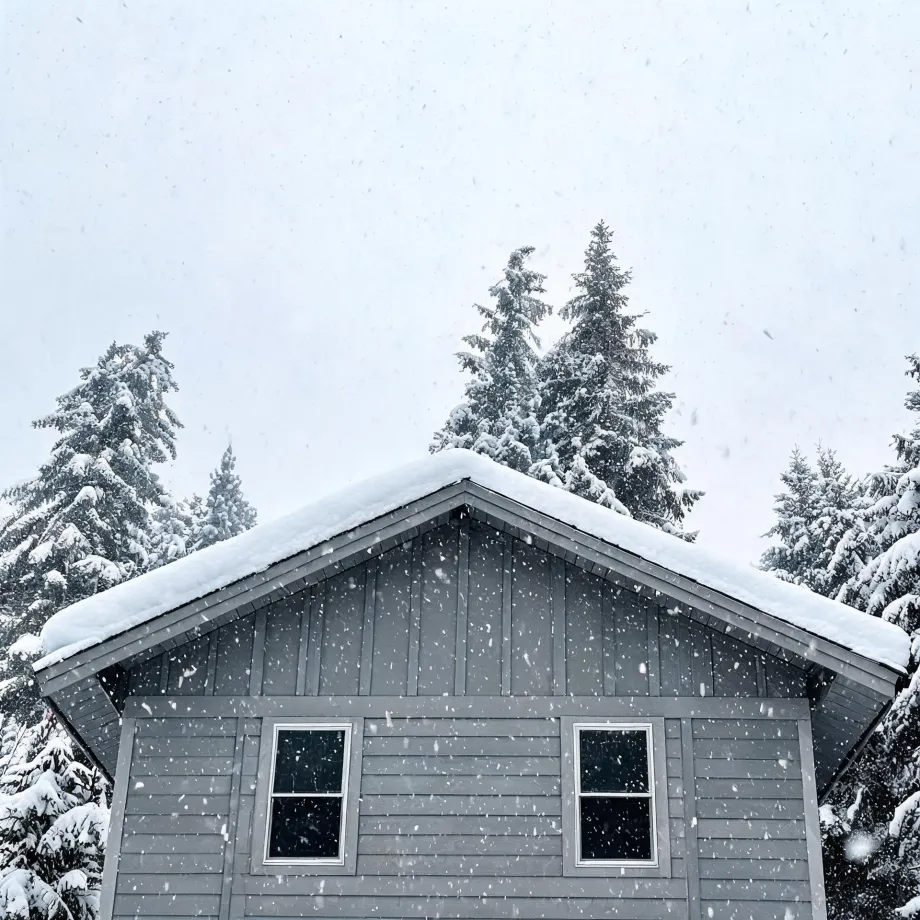
Sizing a furnace for this area means accounting for a burner that earns almost no off-season rest. Homes in Madison County, ID run heat about ten months a year, from September through June. The heat exchanger, the ignition system, and the inducer motor all accumulate cycling stress through that span, and a unit that was undersized at install runs harder to keep up, which shortens the life of those components. A contractor quoting a new furnace here has to get the load calculation right before anything else, because an undersized box does not just underperform, it fails earlier, and a failed furnace in Madison County is rarely discovered in a mild month.
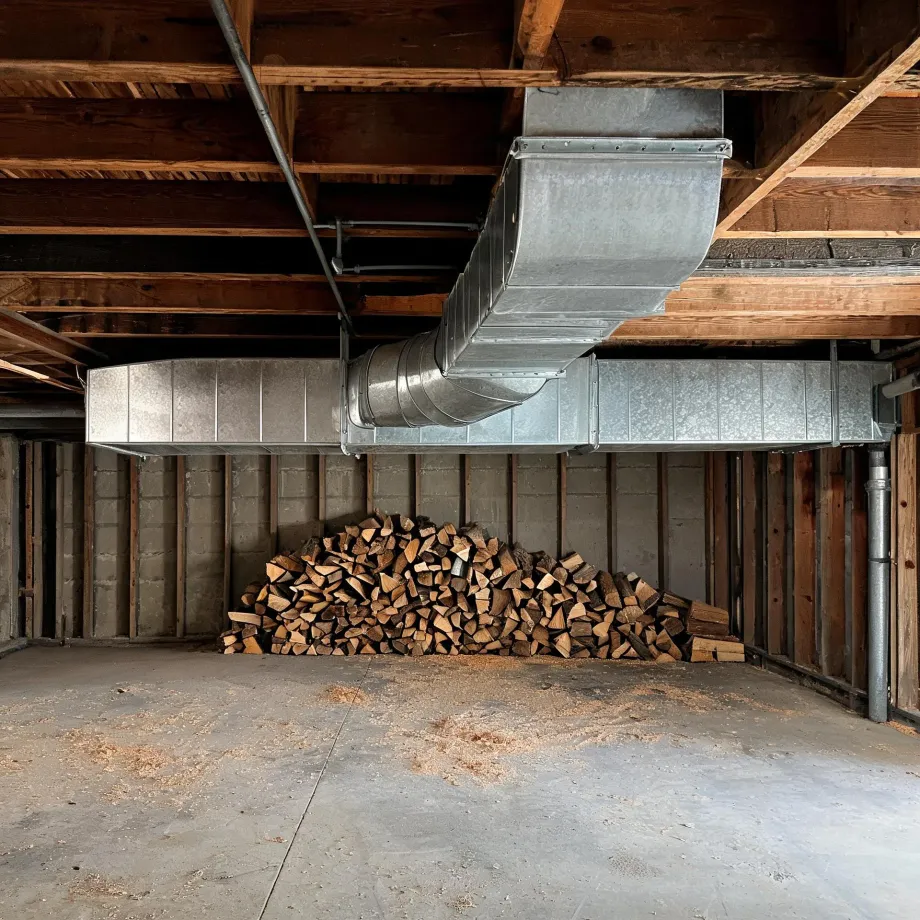
Ductwork built for one generation of furnace does not automatically carry the next. Half the homes in Madison County, Idaho were built in 2002 or earlier (2020-2024 ACS 5-year). That gap between what the house was built with and what a contractor is putting in is where a furnace installation either holds to its original quote or expands into additional work. A contractor who skips a duct assessment before pricing the job is guessing at a number the house has already decided.
What Gets Installed With a New Furnace
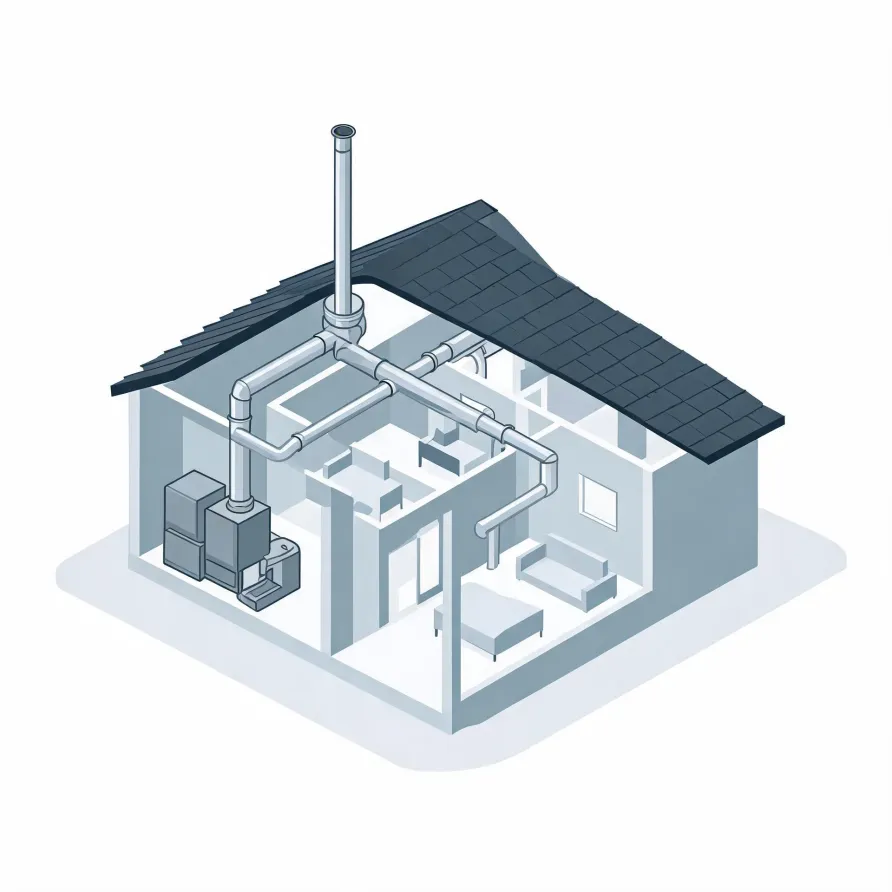
The furnace itself sits in a utility room, basement, or closet and is the core unit a contractor places and connects. A heat exchanger inside it warms the air that moves through the house, and a blower motor pushes that air outward. The flue pipe runs from the furnace to an exterior wall or the roof, carrying combustion exhaust out of the home.
The thermostat mounts on an interior wall and is the control point the homeowner touches every day. A contractor also installs or connects a filter housing near the air handler to catch particulates before they reach the internal components. A gas line connection ties the furnace to the home's fuel supply at the unit's inlet.
The drawing shows a representative layout of these components, and a licensed contractor determines exactly what applies to this house.
Find a contractor in Madison CountyMadison County, by the numbers
168 severe weather events were recorded in Madison County, Idaho between 2015 and 2024.
NOAA National Centers for Environmental Information, Storm Events Database, bulk CSV export, events 2015-01-01 through 2024-12-31.Half the homes in Madison County, Idaho were built in 2002 or earlier (2020-2024 ACS 5-year).
U.S. Census Bureau, 2020-2024 American Community Survey 5-Year EstimatesMadison County, Idaho holds 15,145 housing units (2020-2024 ACS 5-year).
U.S. Census Bureau, 2020-2024 American Community Survey 5-Year EstimatesOwners occupy 40.2% of the occupied homes in Madison County, Idaho (2020-2024 ACS 5-year).
U.S. Census Bureau, 2020-2024 American Community Survey 5-Year EstimatesFurnace Installation Rules That Apply in Madison County, Idaho5 codes & standards
What the Installation Actually Looks Like
Non-weatherized gas furnaces manufactured on or after November 19, 2015 must reach 80.0 percent AFUE.
Non-weatherized oil-fired furnaces manufactured on or after November 19, 2015 must reach 83.0 percent AFUE.
Mobile home gas furnaces manufactured on or after November 19, 2015 must reach 80.0 percent AFUE.
Non-weatherized gas furnaces manufactured on or after December 18, 2028 must reach 95.0 percent AFUE, up from the 80.0 percent minimum that applies to units manufactured before that date.
Licensing and Legal Requirements in Madison County, Idaho
Idaho requires a state certificate of competency for heating, ventilation and air conditioning work: it is unlawful to engage in the business, trade or practice without passing the examination and holding the certificate.
Severe Weather History in Madison County
Furnaces in Madison County work against whatever the climate delivers, and the load that weather places on heating equipment shapes what gets installed and how it gets sized. A contractor who knows this area's weather record brings that knowledge to every job.
168 severe weather events, 2015–2024. Source: NOAA National Centers for Environmental Information, Storm Events Database.