Tell us about the job
Takes about a minute. No obligation.
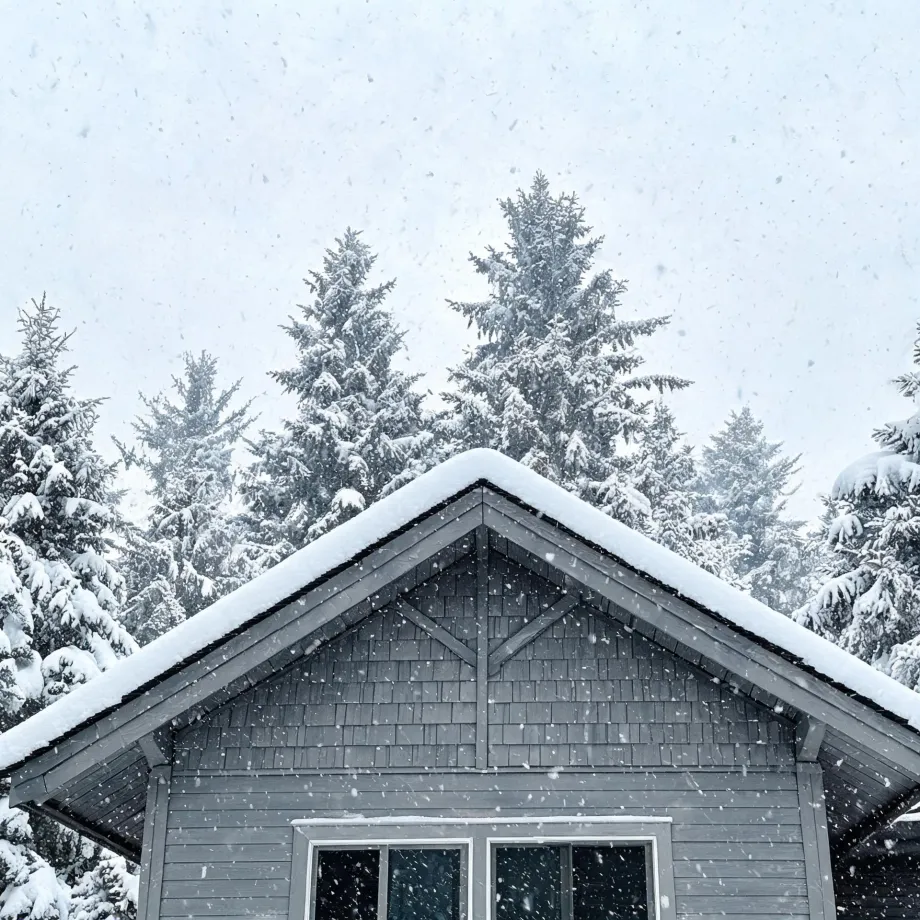
Sizing a furnace for a house in Bonneville County starts with how much work the burner and heat exchanger are actually asked to do. Homes in Bonneville County, ID run heat about ten months a year, from September through June. A contractor quoting a replacement has to account for that load when selecting equipment capacity and specifying installation quality, because a unit running at the edge of its design range through a season this long puts stress on the igniter and heat exchanger with very little idle time between cycles. Undersized equipment installed loosely does not get a long summer to sit quiet and recover.
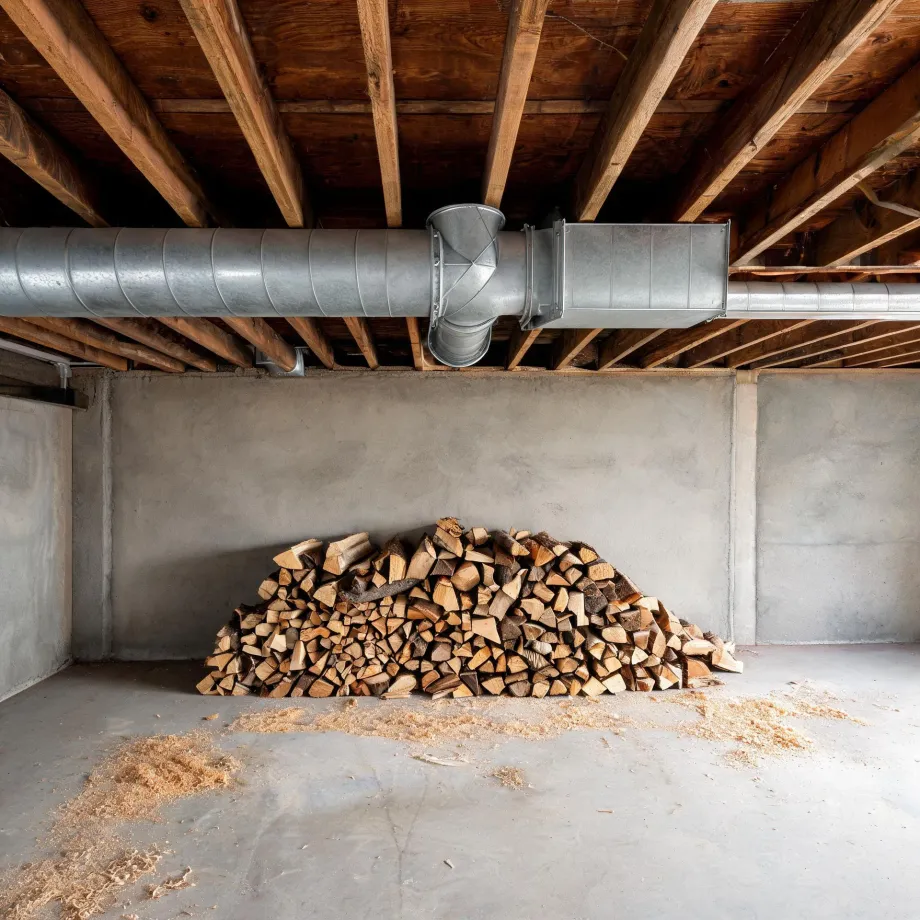
Ductwork in much of this county was laid out for a system that is no longer there. Half the homes in Bonneville County, Idaho were built in 1985 or earlier (2020-2024 ACS 5-year). That gap between the building and what runs in it now is where a furnace installation gets complicated: a contractor has to establish whether the existing duct runs and trunk lines will move the air a new unit produces before the new unit is chosen, not after. If they will not, the ductwork becomes part of the job alongside the furnace itself. The electrical service gets the same check, because a new furnace may draw differently than what the panel was last configured for.
What Gets Installed With a New Furnace
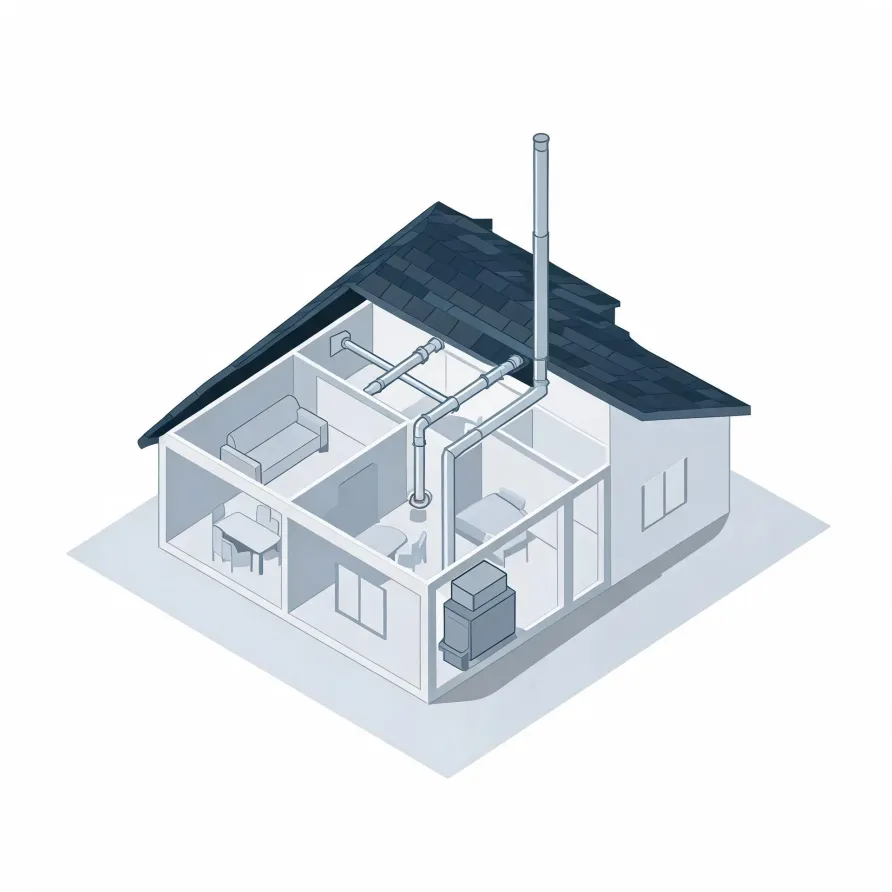
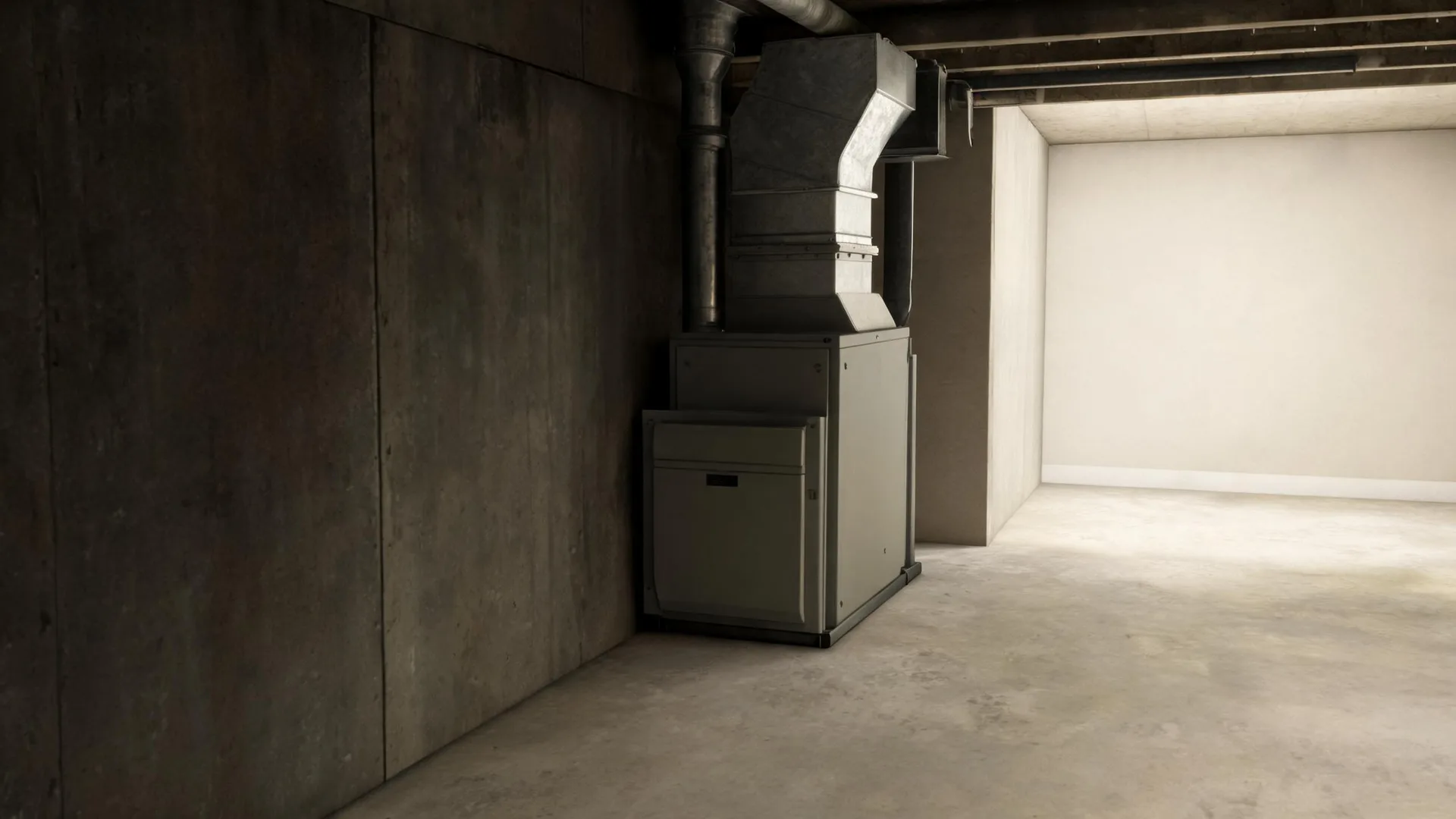
The furnace itself sits in a mechanical room, basement, or utility closet and is the box a homeowner is most likely to recognize. Inside it, a burner fires and a heat exchanger warms the air that will move through the house. A contractor mounts the unit, connects it to the gas line, and sets the flue so combustion gases exit safely.
The air handler and blower sit within or directly beside the furnace cabinet and push conditioned air into the supply side of the duct system. The thermostat mounts on a wall in the living area and is the control point the homeowner sees and uses every day. A contractor also installs the condensate or venting components that the specific unit and local code require.
The drawing shows a typical layout, and a licensed contractor determines what applies to this particular house.
Find a contractor in Bonneville CountyBonneville County, by the numbers
301 severe weather events were recorded in Bonneville County, Idaho between 2015 and 2024.
NOAA National Centers for Environmental Information, Storm Events Database, bulk CSV export, events 2015-01-01 through 2024-12-31.Half the homes in Bonneville County, Idaho were built in 1985 or earlier (2020-2024 ACS 5-year).
U.S. Census Bureau, 2020-2024 American Community Survey 5-Year EstimatesBonneville County, Idaho holds 47,489 housing units (2020-2024 ACS 5-year).
U.S. Census Bureau, 2020-2024 American Community Survey 5-Year EstimatesOwners occupy 71.7% of the occupied homes in Bonneville County, Idaho (2020-2024 ACS 5-year).
U.S. Census Bureau, 2020-2024 American Community Survey 5-Year EstimatesFurnace Installation Rules and Codes for Bonneville County, Idaho5 sourced standards and laws
What happens when the contractor shows up
Non-weatherized gas furnaces manufactured on or after November 19, 2015 must reach 80.0 percent AFUE.
Non-weatherized oil-fired furnaces manufactured on or after November 19, 2015 must reach 83.0 percent AFUE.
Mobile home gas furnaces manufactured on or after November 19, 2015 must reach 80.0 percent AFUE.
Non-weatherized gas furnaces manufactured on or after December 18, 2028 must reach 95.0 percent AFUE, up from the 80.0 percent minimum that applies to units manufactured before that date.
Licensing Rules for Bonneville County, Idaho
Idaho requires a state certificate of competency for heating, ventilation and air conditioning work: it is unlawful to engage in the business, trade or practice without passing the examination and holding the certificate.
Severe Weather Events in Bonneville County
Bonneville County's climate puts real demands on residential heating equipment, and those demands show up in how often systems run, how hard they work, and how quickly they wear. A furnace sized and installed for local conditions handles that load differently than one spec'd somewhere else.
301 severe weather events, 2015–2024. Source: NOAA National Centers for Environmental Information, Storm Events Database.